Table of Contents
Reviewed by Dr Dhillon, Vein Care
Written By Vein Care Team, Vein Assessment and Treatment Specialists
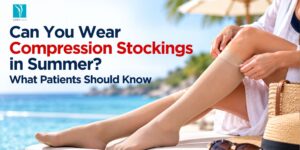
Compression stockings in summer can still be appropriate for people advised to use them for venous symptoms, swelling or recovery. Heat may make legs feel heavier and garments less comfortable, but summer itself is not a reason to stop prescribed compression.
If you have varicose veins, recurring ankle swelling or leg heaviness, the practical question is not simply whether the weather is hot. It is whether your stockings fit correctly, whether you have been advised to wear them, and whether your symptoms need assessment. This guide explains how to make compression more manageable through an Australian summer and when a vein review is worth arranging.
Why can summer make compression stockings harder to wear?
Summer heat can make compression stockings feel warmer, stickier and harder to tolerate, while heat-related blood-vessel dilation can contribute to leg swelling. In Melbourne, average maximum temperatures are about 26°C in January and February, so summer comfort planning matters.
According to the Bureau of Meteorology, Melbourne’s mean maximum temperature is about 26.3°C in January and 26.5°C in February. Hotter days can be considerably warmer, and heatwaves place additional stress on the body.
The important distinction is comfort versus clinical need. If your clinician has recommended compression for a diagnosed vein problem or after a procedure, don’t assume that removing it on hot days is automatically safe. Instead, ask whether the prescribed garment, duration or timing can be adjusted.
Heat can also make existing vein symptoms more noticeable. The pattern matters: swelling that appears after standing, heaviness that builds through the day, or symptoms that improve with elevation can be useful information to tell your clinician.
For anyone researching compression stockings hot weather, the key point is that heat changes comfort, not the underlying prescription. The right garment and wearing schedule still depend on why you need compression in the first place.
Can you wear compression stockings in summer if you have varicose veins?
Yes, compression stockings can be worn in summer when they are appropriate for your condition, correctly fitted and used according to clinical advice. They can help manage symptoms such as swelling and aching, but they do not remove established varicose veins.
According to healthdirect, doctors may recommend compression stockings for varicose veins because they apply gentle pressure that helps stop blood pooling in the legs. Healthdirect also advises that stockings should be prescribed and fitted for the correct amount of compression.
For people using compression socks for varicose veins, the goal is symptom management rather than a cure. If your legs feel better with compression but become uncomfortable in heat, that is a useful treatment conversation, not a reason to choose a different pressure level yourself.
Vein Care’s existing Compression Stockings FAQ explains that compression stockings can form part of varicose vein aftercare and that the type and duration depend on the treatment programme.
Who may need extra care?
People with significant swelling, fragile skin, leg ulcers, circulation problems or a history of vascular disease should not simply choose compression based on an online guide. A clinician needs to consider the cause of the swelling and whether compression is appropriate.
Summer Compression Decision Guide
| Situation | What it means | Practical next step |
| Prescribed stockings feel comfortable | The current plan is tolerable | Continue as instructed |
| Stockings feel warmer but fit well | Heat is mainly a comfort issue | Use cooling and garment-care strategies |
| Stockings feel too tight or dig into skin | Fit or pressure may need review | Contact your clinician or fitter |
| Legs swell before you can put them on | Timing may be making application harder | Ask about earlier application |
| Persistent skin irritation or numbness | The garment may not be suitable or correctly fitted | Seek clinical advice |
| New one-sided swelling or significant pain | Another medical problem may be present | Seek prompt medical assessment |
How can you stay comfortable wearing compression stockings in heat?
Wearing compression stockings in heat is easier when you reduce warmth and friction without changing prescribed compression. Put them on when your legs are least swollen, choose a lightweight option with professional guidance, and keep the garment and skin clean and dry.
1. Put them on early
Put the stockings on before your legs swell, usually early in the morning if your clinician’s instructions allow: a less swollen leg is generally easier to fit correctly.
2. Ask about lighter or open-toe options
Ask your clinician or qualified fitter about a lighter-weight or open-toe design: summer compression stockings are available in different constructions, but the garment must still deliver the compression you have been prescribed.
3. Plan demanding outdoor time sensibly
Schedule outdoor activity for cooler parts of the day where practical: early morning or later afternoon can be more comfortable than prolonged exposure during peak heat.
4. Keep your skin dry
Dry your legs thoroughly before putting the stockings on: moisture and friction can increase irritation, particularly when a garment is worn for many hours.
5. Don’t lower the pressure yourself
Keep the prescribed compression level unless your clinician changes it: a cooler-feeling stocking is not automatically a medically suitable stocking.
6. Use simple cooling strategies
Use air conditioning, shade and cool environments rather than soaking the garment: cooling your surroundings is safer and more practical than keeping wet fabric against the skin for long periods.
What should you check before changing your stockings?
The safest summer change is usually a comfort or garment-design discussion, not an independent change in compression pressure. Check the fit, length, skin condition and prescribed wearing schedule first, then ask your clinician whether a different garment is appropriate.
Fit matters more than choosing a weaker stocking
A stocking that rolls, bunches, digs into the skin or feels excessively tight needs attention. According to the Australian and New Zealand Society for Vascular Surgery, the correct grade and proper fitting are important, and compression stockings can be inconvenient in warm weather.
Do not fold the top down to make it feel cooler. A folded band can create concentrated pressure instead of the graduated support the garment is designed to provide.
What does a good fit feel like?
The stocking should feel firm and supportive rather than painfully tight. It should lie smoothly against the leg without obvious wrinkles, twisting or a rolled edge.
If you develop persistent numbness, tingling, significant pain, new skin breakdown or marked colour change, remove the garment if your clinical instructions permit and seek medical advice promptly.
How should you care for compression stockings during hot weather?
Hot weather increases sweat and skin contact, so regular washing, thorough drying and skin checks become especially important. Follow the garment manufacturer’s care instructions rather than assuming every compression stocking can be washed or dried in the same way.
Wash and rotate
Wash the garment according to its care label and allow it to dry fully before the next use: regular cleaning helps manage sweat, odour and skin contact.
Keep a second pair available when practical: rotating pairs means one can be cleaned and dried while the other is being worn.
Check your skin
Inspect the skin whenever you remove the garment: look for persistent redness, blistering, pressure marks, rash or broken skin.
According to healthdirect, compression stockings can cause discomfort, blisters and ulcers when they are not fitted correctly, with greater risk in people who have poor circulation.
Be cautious after swimming
Remove and care for the garment according to its instructions after swimming: prolonged moisture against the skin can contribute to irritation, and the garment should be clean and fully dry before reuse.
When should you seek medical advice about heavy or swollen legs?
Seek medical advice when leg heaviness or swelling is persistent, worsening, one-sided, painful, or accompanied by skin changes, visible vein changes or other symptoms. Sudden swelling with pain, redness or warmth needs prompt assessment because a blood clot can present this way.
If you are asking why do my legs feel heavy when to see a doctor, the answer is to seek review when the heaviness keeps returning, affects work or walking, or is becoming more frequent. Varicose vein symptoms can include heaviness, aching, swelling, itching and skin changes.
According to healthdirect, you should see your doctor if varicose-vein symptoms are bothering you, you have skin colour changes, or you want treatment. Sudden red or swollen legs can require more urgent medical attention.
Call 000 for severe symptoms such as chest pain or difficulty breathing, particularly if they occur with suspected DVT symptoms. Healthdirect identifies pulmonary embolism as a serious complication of DVT and advises emergency care for relevant symptoms.
What treatment questions should you ask if stockings are not enough?
If compression helps but your symptoms keep returning, ask whether an underlying vein problem needs assessment rather than simply increasing compression. A clinical review can consider your symptoms, visible veins, medical history and, when appropriate, duplex ultrasound findings before treatment is discussed.
Useful why do my legs feel heavy treatment questions include:
- Could venous reflux be contributing to my symptoms?
- Do I need a duplex ultrasound?
- Is my current compression appropriate for my symptoms?
- Would treating an abnormal vein change the heaviness or swelling?
- Which treatment options fit my vein pattern and medical history?
- How would treatment affect my need for compression afterwards?
At Vein Care, assessment comes before treatment planning. The clinic states that symptoms, vein anatomy, medical history and ultrasound findings, where appropriate, influence which treatment is suitable. See the varicose vein treatment options for the clinic’s current approach.
For some patients, supportive measures are enough. For others, persistent symptoms or documented reflux may lead to discussion of procedures such as sclerotherapy, ultrasound-guided sclerotherapy, endovenous laser treatment or vein glue. See the sclerotherapy and microsclerotherapy information for treatment details.
An illustrative patient scenario
Imagine a Melbourne office worker whose ankles feel heavy by late afternoon, particularly after sitting for long periods. Compression may make the legs more comfortable, but if the heaviness repeatedly returns and visible veins are becoming more prominent, the useful next step is assessment rather than automatically choosing stronger stockings.
That scenario is illustrative, not a diagnosis. Leg heaviness has multiple possible causes, and a clinician needs to determine whether venous disease is actually involved.
How often should you review your summer compression routine?
Compression stockings in summer should be reviewed when heat, sweating, swelling or skin discomfort makes your prescribed routine harder to follow. A review focuses on fit, garment care and clinical suitability rather than automatically reducing compression pressure.
| Situation | Practical response |
| Mild warmth and comfortable fit | Continue the prescribed routine |
| More sweating than usual | Clean the garment as directed and check skin |
| Stocking feels too tight | Check fit and contact your clinician or fitter |
| Swelling makes the stocking difficult to apply | Put it on earlier and seek advice if this persists |
| Persistent redness, rash or skin breakdown | Stop and seek clinical advice |
| New or worsening one-sided swelling or pain | Seek prompt medical assessment |
| Chest pain or difficulty breathing | Call 000 |
Conclusion
Compression stockings in summer can be appropriate when they have been correctly selected, fitted and recommended for your individual needs. The most useful approach is to manage heat and moisture while keeping the prescribed compression routine, rather than changing the pressure yourself.
If heavy, aching or swollen legs continue despite supportive measures, a vein assessment can help determine whether venous reflux or another condition is contributing. Vein Care provides assessment and treatment planning across Melbourne.
Medical Information Notice
This article provides general health information and is not a substitute for an individual medical assessment. Compression type, pressure level and wearing schedule should be determined with your treating clinician when medical compression has been recommended.
FAQ'S
How often should compression stockings be replaced?
Compression stockings usually need replacement when they no longer fit or provide the intended support, or according to the manufacturer’s guidance. Frequent summer wear and washing can increase wear. Check for stretched fabric, loss of elasticity, damage or persistent slipping, and ask your clinician or fitter when replacement is due.
Can I sleep in compression stockings during summer?
No, unless your clinician has specifically prescribed overnight wear. Many daytime compression stockings are designed to be removed at bedtime, allowing your skin to be checked and the garment to be cleaned. Post-treatment instructions can differ, so follow the schedule given by your treating clinician rather than a general summer rule.
Can I wear compression stockings if I have sensitive or damaged skin?
No, not without clinical advice when the skin is broken, infected, ulcerated or unusually fragile. Compression may be appropriate for some skin and vein conditions, but the cause and severity need assessment first. If a stocking causes persistent redness, pain, blistering or skin breakdown, contact your healthcare professional.
Can I wear compression stockings while travelling in summer?
Yes, when compression is appropriate for you, summer travel can be managed with the same focus on correct fit, hydration and regular movement. On long flights or car trips, follow your clinician’s advice about compression and get up or move your legs regularly. Seek medical advice if you have specific clot risks.
Can I wear compression stockings outdoors in the sun?
Yes, but compression stockings do not replace sun protection. Protect exposed skin with appropriate clothing, shade and sunscreen, and follow your garment’s care instructions. If you have recently had vein treatment, ask your clinician about any specific sun-exposure restrictions because advice can vary with the procedure and your skin’s healing.