Skip to content

Ambulatory Phlebectomy
- Home
- Ambulatory Phlebectomy
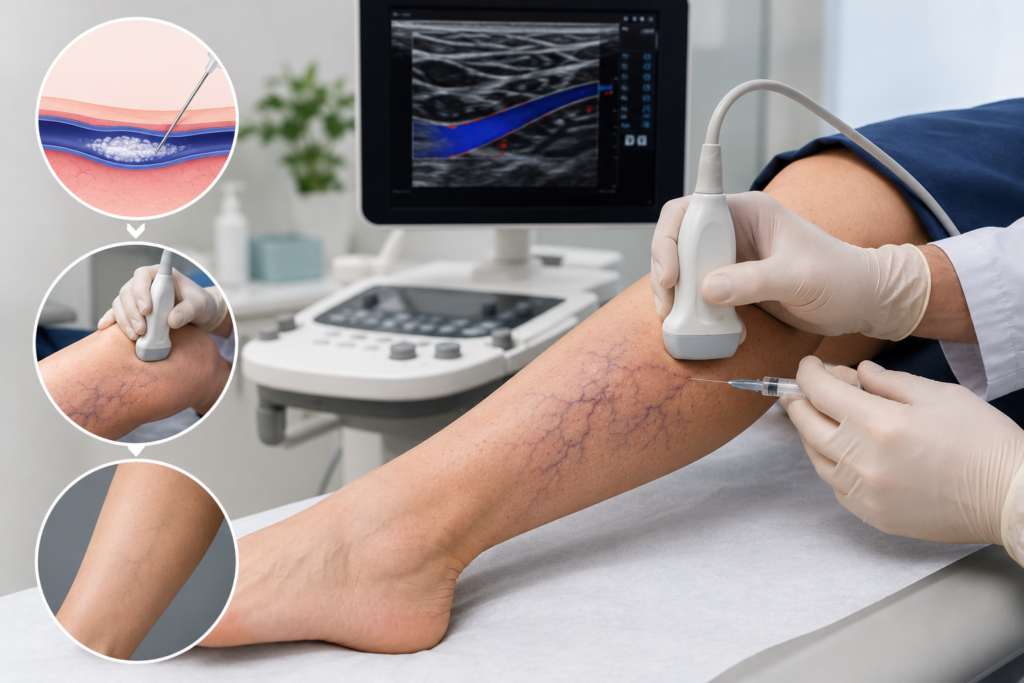
Ambulatory Phlebectomy Treatement in Melbourne
Ambulatory phlebectomy, also known as microphlebectomy, is a minimally invasive surgical procedure used to remove selected bulging superficial varicose veins through small openings in the skin. It is commonly performed under local anaesthetic and may be considered for prominent surface veins associated with symptoms or other clinical concerns.
Unlike endovenous laser treatment (EVLT), which uses heat to close selected refluxing veins, ambulatory phlebectomy physically removes the targeted surface veins. Some patients have both bulging tributary veins and underlying venous reflux, so assessment is important before deciding which treatment may be appropriate.
What Is Ambulatory Phlebectomy?
Ambulatory phlebectomy is a procedure in which selected superficial varicose veins are removed through small skin punctures or incisions. The clinician administers local anaesthetic, makes small openings near the targeted vein and uses a specialised instrument to remove sections of the affected vessel.
The procedure is also referred to as:
Microphlebectomy
Mini-phlebectomy
Stab avulsion phlebectomy
Ambulatory vein removal
Although the techniques may vary, these terms generally describe removal of selected surface varicose veins through small skin openings.
How Does Ambulatory Phlebectomy Differ From Other Vein Treatments?
Ambulatory phlebectomy physically removes selected superficial veins. By comparison, endovenous laser treatment (EVLT) uses thermal energy delivered inside a vein to close a suitable refluxing superficial vessel. Sclerotherapy involves injecting a solution into a selected abnormal vein with the aim of closing it. These procedures treat different vein patterns and should not be considered interchangeable.
Does Removing a Varicose Vein Affect Circulation?
The superficial veins targeted during phlebectomy are part of a wider venous network. Removing an appropriately selected abnormal surface vein generally allows blood to continue returning through other functioning veins. However, the effects of treatment depend on individual vein anatomy and circulation.
A clinical assessment helps establish whether the targeted vein can be removed appropriately and whether any underlying venous condition requires separate management.
Which Varicose Veins May Be Suitable for Ambulatory Phlebectomy?
Ambulatory phlebectomy may be considered for selected prominent superficial varicose veins, particularly veins that are raised or bulging beneath the skin.
Bulging Surface Varicose Veins
Some varicose veins appear as twisted, raised or rope-like vessels along the legs. They may be associated with aching, heaviness, tenderness, itching or local discomfort. When these veins are accessible and clinically suitable for removal, ambulatory phlebectomy may be one treatment option.
Enlarged Superficial Tributary Veins
Tributary veins are branches of larger superficial veins. They may become enlarged because of abnormal blood flow or increased venous pressure within the superficial venous system. Selected bulging tributary veins may be suitable for phlebectomy. Treatment planning should also consider whether a larger connected vein has significant reflux.
Residual or Recurrent Varicose Veins
Some patients have prominent surface veins remaining after earlier treatment or develop additional varicose veins over time. A new examination may help identify the cause and determine whether the affected surface veins are suitable for removal. Not all recurrent varicose veins require phlebectomy. Another procedure or non-interventional management may be appropriate.
Is Phlebectomy Used for Spider Veins?
Ambulatory phlebectomy is generally not used for very small spider veins. Depending on their characteristics and clinical findings, smaller visible veins may be assessed for sclerotherapy and microsclerotherapy or other suitable management.
Clinical Assessment and Duplex Ultrasound
Clinical assessment helps determine whether a visible varicose vein is suitable for removal and whether there is an underlying venous condition that should influence treatment planning.
The assessment may consider:
Location, size and distribution of visible veins
Aching, heaviness, tenderness or swelling
Skin changes or inflammation
Previous vein treatment
Medical conditions and current medications
Previous blood clots
Mobility and circulation concerns
Individual treatment goals and preferences
When Is Duplex Ultrasound Needed?
Duplex ultrasound provides information about vein anatomy and blood flow. It may be recommended when symptoms, the appearance of the veins, previous treatment or clinical findings suggest underlying venous reflux. Ultrasound can help identify abnormal blood flow in larger superficial veins and clarify how these vessels connect with visible tributary veins. The need for ultrasound depends on the individual clinical presentation.
Why Is Underlying Venous Reflux Important?
Some bulging surface veins are connected to larger superficial veins in which valves do not work effectively, allowing blood to flow backwards. This is known as venous reflux. Removing a visible tributary vein does not necessarily correct abnormal flow in the larger connected vein. A patient may therefore require treatment of underlying reflux, removal of selected surface veins, a combination of procedures or observation. The most appropriate option depends on the diagnosis and individual circumstances.
How Is Ambulatory Phlebectomy Performed?
Ambulatory phlebectomy is commonly performed as an outpatient procedure under local anaesthetic. The technique and number of skin openings depend on the veins being removed.
A typical procedure may involve the following steps:
Clinical review and informed consent: The clinician confirms the treatment plan and discusses material risks, expected recovery and available alternatives.
Vein marking: Selected visible veins are identified and marked before removal.
Skin preparation: The affected area is cleaned and prepared.
Local anaesthetic: Anaesthetic is administered to numb the treatment area.
Small skin openings: Tiny punctures or incisions are made near the targeted veins.
Vein removal: A specialised instrument is used to access and remove sections of the selected superficial veins.
Dressings and compression: Adhesive strips, dressings, bandages or compression may be applied according to the procedure.
Aftercare: The patient receives instructions about movement, wound care, potential complications and follow-up.
Small skin openings often do not require stitches, although sutures may be used in some circumstances.
Is Ambulatory Phlebectomy Painful?
Local anaesthetic is used to reduce pain during the procedure, but patients may experience the anaesthetic injections, pressure or pulling sensations. Bruising, tenderness or local discomfort may occur afterwards. The degree of discomfort varies according to the extent of treatment and individual factors.
How Long Does the Procedure Take?
The duration depends on the number, size and location of veins being removed and whether another procedure is performed at the same appointment. Your clinician can explain the expected procedure time and appointment arrangements after reviewing your condition.
Potential Benefits and Treatment Limitations
For suitable patients, ambulatory phlebectomy allows selected prominent superficial veins to be removed without conventional stripping of a larger vein.
Potential benefits may include:
Physical removal of selected bulging surface veins
Small skin openings rather than large surgical incisions
The option of local anaesthetic in appropriate circumstances
An outpatient treatment approach
Possible improvement in symptoms associated with the removed veins
The possibility of treating surface tributaries alongside management of underlying reflux when clinically appropriate
What Are the Limitations?
Ambulatory phlebectomy is not suitable for every varicose vein pattern. The procedure does not necessarily address underlying reflux within the great or small saphenous veins. Some patients require a different procedure, combined treatment or staged management. Bruising, scarring, pigmentation changes and other complications may occur. The expected benefits should be considered alongside the procedure’s limitations, material risks and available alternatives.
Risks, Side Effects and Contraindications
Ambulatory phlebectomy is a surgical procedure with potential side effects and complications. Individual risks depend on the veins being treated, the extent of removal, the anaesthetic used and relevant medical conditions.
Possible Side Effects
These may include:
Bruising and tenderness
Local swelling
Temporary discomfort or aching
Bleeding or oozing from small skin openings
Firmness or local inflammation
Skin discolouration or pigmentation
Small scars
Temporary numbness or altered sensation
Some side effects settle gradually, while pigmentation, scarring or altered sensation may persist.
Less Common but Potentially Serious Complications
Potential complications include:
Wound infection
Significant bleeding or haematoma
Persistent scarring
Delayed wound healing
Sensory nerve injury, including persistent numbness or pain
Injury to nearby tissues or vessels
Superficial vein thrombosis
Deep vein thrombosis (DVT)
Rare pulmonary embolism
Allergic reactions or complications associated with local anaesthetic
Some complications may require additional medical treatment and can result in lasting harm.
The clinician should explain the material risks relevant to your procedure, potential benefits, reasonable alternatives and the consequences of not undergoing treatment.
Who May Not Be Suitable for Ambulatory Phlebectomy?
Treatment may need to be postponed, modified or avoided depending on individual medical circumstances.
Tell your clinician if you:
Are pregnant or breastfeeding
Have a current or previous blood clot
Have significant arterial circulation problems
Have limited mobility
Have an active infection or wound near the proposed treatment area
Have poor wound healing or relevant skin conditions
Have a bleeding or clotting disorder
Take anticoagulant or antiplatelet medication
Have experienced a reaction to local anaesthetic
Have other medical conditions that may affect treatment safety
These factors do not all automatically prevent treatment. Some require individual assessment or additional precautions.
Do not stop prescribed medicines unless advised by your prescribing doctor or treating clinician.
Preparation, Recovery and Aftercare
Recovery following ambulatory phlebectomy depends on the extent of treatment, whether other procedures were performed and individual medical circumstances.
Preparing for Ambulatory Phlebectomy
Before treatment, you may be asked to:
Provide an up-to-date medication list
Discuss previous blood clots and medical conditions
Disclose allergies or previous reactions to anaesthetics
Wear comfortable clothing
Discuss travel and transport arrangements
Bring compression garments if recommended
Follow individual preparation instructions
Do not change prescribed medicines or assume fasting is required unless specifically instructed.
Walking and Returning to Daily Activities
Walking is commonly encouraged after ambulatory phlebectomy. Some patients may resume light daily activities relatively soon, while others require additional recovery time. The timing depends on the number of veins treated, discomfort, mobility and any associated procedures. Strenuous exercise, heavy lifting and prolonged physical activity may need to be restricted temporarily.
Wound Care and Dressings
The small skin openings may be covered with adhesive strips, dressings or bandages. Follow your clinician’s instructions about keeping dressings clean, bathing, wound care and when dressings or adhesive strips can be removed. Do not assume every patient follows the same wound-care schedule.
Compression Stockings After Phlebectomy
Compression stockings or bandages may be recommended after treatment. Your clinician should explain the type of compression, whether it is required and how long it should be worn.
Driving, Work and Travel
Driving depends on comfort, leg movement, medications used and the ability to safely control a vehicle. People whose work involves heavy lifting, prolonged standing or significant physical activity may need different recovery arrangements from those undertaking light duties. Discuss planned flights or long-distance travel with your clinician before the procedure.
Results, Scarring and Recurrence
What Happens to the Removed Varicose Veins?
The selected vein segments are physically removed during ambulatory phlebectomy. However, removing a surface vein does not necessarily correct abnormal blood flow in a larger connected superficial vein. Other abnormal veins may still require assessment or treatment.
Will Ambulatory Phlebectomy Leave Scars?
Small skin openings can leave scars or pigmentation changes. Their appearance depends on the number and position of the openings, healing response, skin characteristics and any complications. Scars may become less noticeable over time, but scar-free healing cannot be guaranteed.
Can Varicose Veins Return After Phlebectomy?
The removed vein segments are no longer present, but other veins may enlarge or develop reflux over time. Some underlying venous abnormalities may persist if they have not been treated. Patients who develop new symptoms or prominent veins may need reassessment to determine whether additional management is appropriate.
Will I Need More Than One Treatment?
Some patients require additional treatment for other abnormal veins or underlying reflux. The need for combined or staged procedures depends on the clinical findings, extent of venous disease and individual circumstances.
Ambulatory phlebectomy cannot guarantee permanent prevention of new varicose veins or complete relief of symptoms.
Ambulatory Phlebectomy vs Other Vein Treatments
Ambulatory phlebectomy differs from treatments designed to close abnormal veins without physically removing them.
| Treatment | Main approach | Typical clinical role |
|---|---|---|
| Ambulatory phlebectomy | Removes selected veins through small skin openings | Bulging superficial tributary veins |
| Endovenous laser treatment (EVLT) | Uses laser heat inside the vein | Selected refluxing superficial truncal veins |
| Ultrasound-guided sclerotherapy | Injects sclerosant under ultrasound guidance | Selected abnormal superficial veins |
| Direct-vision sclerotherapy | Injects sclerosant into visible surface veins | Selected smaller superficial veins |
| Cyanoacrylate vein glue | Uses medical adhesive to close selected veins | Suitable refluxing superficial veins |
| Compression or monitoring | Non-interventional management | Selected patients when intervention is unnecessary or unsuitable |
Can Ambulatory Phlebectomy Be Combined With EVLT?
Ambulatory phlebectomy may be performed alongside endovenous laser treatment when a patient has both an underlying refluxing superficial vein and enlarged tributary varicose veins. For appropriately selected patients, treatment of the underlying reflux and associated tributary veins during the same treatment episode may be considered. In other circumstances, staged treatment may be more suitable because of vein anatomy, medical factors or individual preferences.
The clinician should explain the reasons for the proposed approach, including potential benefits, material risks, recovery requirements and alternatives. This does not mean that combined treatment is necessary or suitable for every patient. Patients can learn more about endovenous laser treatment in Melbourne or ultrasound-guided sclerotherapy.
The wider range of varicose vein treatment options at Vein Care can also help patients understand how different procedures are used.
Ambulatory Phlebectomy Cost and Medicare in Melbourne
The cost of ambulatory phlebectomy depends on the number and location of affected veins, the proposed procedure and individual clinical circumstances.
Factors that may influence fees include:
Initial consultation
Duplex ultrasound when indicated
Extent of vein removal
Anaesthetic and procedure arrangements
Whether treatment is combined with another procedure
Compression garments and dressings
Follow-up consultations
Additional treatment sessions when required
Is Ambulatory Phlebectomy Covered by Medicare?
Some medically indicated varicose vein procedures may qualify for Medicare benefits when the relevant Medicare Benefits Schedule requirements are met. Eligibility depends on the diagnosis, procedure performed, applicable item criteria and practitioner arrangements.
Treatment undertaken solely for cosmetic reasons may not qualify. Medicare eligibility should not be assumed before assessment and confirmation of the relevant requirements.
Vein Care's Clinical Assessment Approach
Vein Care Melbourne provides assessment and management options for varicose veins and related venous disease. Dr Gurjit Dhillon is a medical practitioner with a clinical focus on venous conditions. His professional information published by Vein Care lists M.B.B.S. and F.A.C.P. (Fellow of the Australasian College of Phlebology).
For patients with prominent surface varicose veins, clinical assessment helps determine whether the problem involves isolated superficial tributaries, underlying venous reflux or a combination of vein abnormalities. Duplex ultrasound may be recommended to investigate venous reflux or support treatment planning.
Where ambulatory phlebectomy is considered, the proposed procedure should be discussed in the context of the patient’s symptoms, vein anatomy, medical history, material risks and alternatives. For some patients, another vein treatment or non-interventional management may be more appropriate. Patients should have an opportunity to ask questions about the procedure, possible scars, recovery arrangements and expected costs before deciding whether to proceed.
You can read more about Dr Gurjit Dhillon and Vein Care.
To book vein treatment for any of the listed conditions, make an appointment with the Melbourne specialists at Vein Care. Call us on 1300 568 676 or contact us online
Address : Suite 307, 685 Burke Road Camberwell VIC 3124
Hours
Monday – Friday
9:00 AM – 5:30 PM
Address
574 Melton Hwy
Sydenham VIC 3037
Hours
Monday – Friday
9:00 AM – 5:30 PM
Address
157 Scoresby Rd
Boronia VIC 3155
Hours
Call ahead to confirm availability.
Frequently Asked Questions
Yes. Ambulatory phlebectomy is a surgical procedure because it involves removing superficial veins through small skin openings. Although it is commonly performed under local anaesthetic, it still carries procedural risks and requires appropriate recovery care.
Microphlebectomy and ambulatory phlebectomy are commonly used to describe closely related techniques for removing selected superficial varicose veins through small skin openings. The exact method and instruments may vary.
Not necessarily. Phlebectomy removes selected surface veins but may not correct underlying venous reflux. Assessment helps determine whether another procedure is required to manage a larger refluxing vein.
Treatment of one or both legs depends on the affected veins, extent of treatment, medical history and procedural planning. Separate or staged treatment may be recommended.
The clinician can explain the assessment findings and discuss other management options. These may include endovenous treatment, sclerotherapy, compression therapy, monitoring or further investigation, depending on the condition.
Referral requirements may depend on the practitioner, appointment arrangements and Medicare considerations. Contact Vein Care before booking to confirm whether a referral is required.
Some people enquire about removal of visible veins primarily because of appearance concerns. Whether treatment is appropriate requires clinical assessment, discussion of material risks and consideration of alternatives, including no treatment. Medicare eligibility and applicable professional requirements may differ for cosmetic-purpose procedures.
Ask which veins would be removed, whether underlying reflux is present, available alternatives, possible benefits, material risks, scarring, recovery requirements, follow-up and anticipated costs. You can also ask what may happen if treatment is deferred or not undertaken.