Table of Contents
Reviewed by Dr Dhillon, Vein Care
Written By Vein Care Team, Vein Assessment and Treatment Specialists
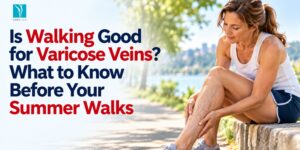
Walking for varicose veins is a helpful, low-impact way to keep your calf muscles active and support blood returning from the legs. It may ease heaviness, swelling and discomfort, but it does not repair faulty vein valves or remove established varicose veins.
If you’re planning outdoor walks through an Australian summer, the aim isn’t to stop moving. Keep activity comfortable and recognise when symptoms need assessment.
Is walking good for varicose veins?
Yes, walking is helpful for people with varicose veins because each step contracts the calf muscles and helps move blood upwards through the leg veins. It supports circulation and may ease symptoms, but it cannot correct damaged valves or remove established veins.
According to healthdirect – Varicose veins, walking makes the leg muscles contract, helping blood flow towards the heart. The Australian and New Zealand Society for Vascular Surgery also advises keeping moving because walking can lower pressure in the leg veins.
For people asking is walking good for varicose veins, the answer is yes for many people. It is supportive care, not a replacement for assessment when symptoms persist.
| Activity | Potential benefit | Main consideration |
| Walking | Calf-muscle movement | Build gradually |
| Cycling | Low-impact leg movement | Adjust resistance to comfort |
| Swimming | Low-impact whole-body activity | Avoid very hot water if heat worsens symptoms |
| Gentle strength work | Supports leg-muscle function | Use suitable loads and technique |
The main benefit of walking for varicose veins is regular calf-muscle activity, not a guaranteed change in the veins.
How does walking support circulation in the legs?
Walking supports circulation by activating the calf-muscle pump, which helps move venous blood out of the lower legs. This can reduce pooling and venous pressure while moving, particularly compared with remaining still for long periods.
What is the calf-muscle pump?
Your leg veins return blood towards the heart against gravity. As you walk, the calf muscles contract around the deep veins and help push blood upwards while functioning valves help limit backward flow.
This is why walking and circulation are closely connected. The benefit comes from movement; walking does not repair a faulty valve.
Why can sitting or standing still make symptoms feel worse?
Long periods in one position reduce active calf-muscle pumping. People who sit, drive or stand at work may notice more heaviness or swelling later in the day.
How should you build a walking routine with varicose veins?
A sensible walking routine starts at a level you can tolerate comfortably, then increases gradually. Australia’s 2026 movement guidelines recommend regular activity on most days, but your plan should reflect your symptoms, fitness, mobility and medical advice.
- Start with 10–15 minutes at a comfortable pace: a shorter walk is easier to maintain if you have been inactive.
- Build towards 30 minutes on most days: increase duration gradually rather than suddenly doubling your walking time.
- Break up long sitting periods every 30–60 minutes: short movement breaks keep the calf muscles active.
- Choose a sustainable pace on level ground first: do not push through significant pain, marked swelling or unusual symptoms.
- Move consistently across the week: regular activity is more useful than one very long walk followed by inactive days.
According to the Australian Government’s 2026 movement guidelines, adults should include moderate- to vigorous-intensity activity on most days and break up prolonged sedentary periods.
What should you change for summer walking with varicose veins?
Summer walking with varicose veins needs more planning because heat can make some people’s leg symptoms more noticeable. Choose cooler times, stay hydrated, wear comfortable footwear and avoid pushing through worsening symptoms in extreme heat.
Choose cooler walking times
Early morning or evening can be more comfortable than the hottest part of the day. If heat makes your legs heavier or more swollen, shorten the walk or move indoors.
Wear breathable clothing, use sun protection and carry water for longer walks. Comfortable shoes can help you maintain a natural walking pattern.
If you’re searching for summer walking varicose veins, the practical issue is how to stay active without aggravating symptoms. Adjust timing, intensity and duration rather than abandoning movement.
| Situation | Practical approach |
| New to exercise | Start with 10–15 minutes |
| Comfortable with walking | Walk regularly on most days |
| Long periods of sitting | Add movement every 30–60 minutes |
| Hot Melbourne day | Walk early or later and carry water |
| Mild heaviness or swelling | Reduce intensity and monitor symptoms |
| Persistent or worsening symptoms | Arrange medical assessment |
Can walking get rid of varicose veins?
No, walking can help manage symptoms and support circulation, but it does not usually remove established varicose veins or repair faulty vein valves. If venous reflux contributes to symptoms, treatment decisions require assessment rather than exercise alone.
Vein Care explains that walking, leg elevation and movement breaks may improve comfort, but established veins generally need assessment if symptoms persist or progress. If you notice varicose vein symptoms such as persistent aching, swelling, skin discolouration, bleeding or slow-healing wounds, consider a clinical review.
Walking for varicose veins can still be worthwhile even when it does not change vein appearance. The goal is movement and symptom support, not a promise that exercise will make the veins disappear.
What other exercise can support vein health?
Walking is one useful option, but cycling, swimming and suitable strength or mobility exercises can also support general fitness. This is why exercise for varicose veins should focus on regular, tolerable movement that suits your health.
Cycling, swimming and calf raises
Cycling provides repeated ankle and calf movement and can be done indoors on hot days. Swimming offers low-impact activity. Simple calf raises and ankle movements can activate the lower-leg muscles during sitting breaks. These activities support movement but do not replace assessment or treatment.
What about running or heavy strength training?
There is no universal rule that everyone with varicose veins must avoid higher-intensity exercise. If an activity repeatedly triggers significant pain, swelling or unusual symptoms, reduce the intensity and discuss your exercise plan with a healthcare professional.
When should you see a doctor about varicose veins?
You should arrange medical assessment when leg symptoms are persistent, worsening or affecting daily activities, particularly with swelling, skin changes, painful bulging veins, bleeding or a slow-healing wound. Sudden severe symptoms require urgent care for you.
According to healthdirect – Varicose veins, see a doctor if symptoms are bothering you, if skin colour changes occur, or if you want treatment. The Australian and New Zealand Society for Vascular Surgery also recommends medical review when varicose veins cause concern or severe symptoms.
Routine assessment signs
- Persistent heaviness or aching
- Recurrent ankle swelling
- Painful bulging veins
- Skin irritation or discolouration
- Bleeding, slow-healing wounds or symptoms affecting daily activity
Urgent warning signs
Seek urgent care for sudden one-sided leg swelling, severe calf or thigh pain, redness or warmth, significant tenderness, chest pain, shortness of breath or significant bleeding.
What should you ask at a vein assessment?
A useful vein assessment looks beyond visible veins and considers symptoms, medical history and abnormal blood flow. Duplex ultrasound may be used when clinically indicated to map veins and identify venous reflux before treatment is planned today.
If walking for varicose veins helps but symptoms keep returning, assessment can clarify whether venous reflux is contributing.
At Vein Care, assessment may include clinical history, examination and duplex ultrasound where appropriate. Ask what may be causing symptoms, whether ultrasound is needed, which options fit your findings, and how treatment affects walking and exercise.
Ask what could be causing your symptoms, whether duplex ultrasound is needed, which treatment options fit your vein anatomy and medical history, what monitoring would involve, and how treatment could affect walking and exercise.
If you’re looking for a varicose vein clinic Melbourne patients can access, Vein Care has clinics in Camberwell, Boronia and Sydenham.
What does a vein assessment or treatment cost in Melbourne?
Vein Care does not publish one fixed price for every patient. Costs in AUD depend on the consultation, ultrasound assessment, treatment type, number of veins, sessions and Medicare eligibility. A personalised estimate is provided after your assessment.
For varicose vein treatment Melbourne options, compare what is included, whether ultrasound is required, how many sessions may be needed and whether treatment is clinically indicated.
Conclusion
Walking for varicose veins can be a simple way to keep your calf muscles working, support circulation and manage some symptoms. It cannot repair damaged vein valves or remove established varicose veins, so persistent or worsening symptoms deserve medical assessment.
Before your next summer walk, choose a comfortable time, build distance gradually and pay attention to how your legs respond. Professional assessment can help identify what is happening beneath the skin and what options may suit you.
FAQ'S
Can varicose veins go away on their own?
Yes, established varicose veins do not usually disappear simply because you exercise or change daily habits. Lifestyle measures may improve comfort, but persistent veins can remain. If they are painful, worsening, swollen or associated with skin changes, assessment can clarify whether treatment or monitoring is appropriate.
Are varicose veins hereditary?
Yes, family history can increase your likelihood of developing varicose veins. Age, pregnancy, prolonged standing and previous vein problems can also influence risk. Having relatives with varicose veins does not mean you will definitely develop them, but it is useful to mention during assessment.
Does elevating your legs help varicose veins?
Yes, elevating your legs can help some people reduce swelling and heaviness by using gravity to assist venous return. It is a comfort measure rather than treatment for faulty vein valves. Persistent, one-sided or worsening swelling needs medical assessment rather than relying on elevation alone.
Can I wear compression stockings while walking?
Yes, compression stockings can be worn for some activities, including walking, when they have been recommended and correctly fitted for you. The appropriate compression level depends on your circumstances. Ask your clinician before using compression if you have other circulation problems or unexplained leg symptoms.
Can varicose veins occur without visible bulging veins?
Yes, vein problems can sometimes cause heaviness, aching, swelling or skin changes without a large visible bulging vein, even when the surface looks normal. Persistent symptoms without an obvious vein may warrant examination or duplex ultrasound assessment by a clinician.