
Treatments
- Home
- Treatments
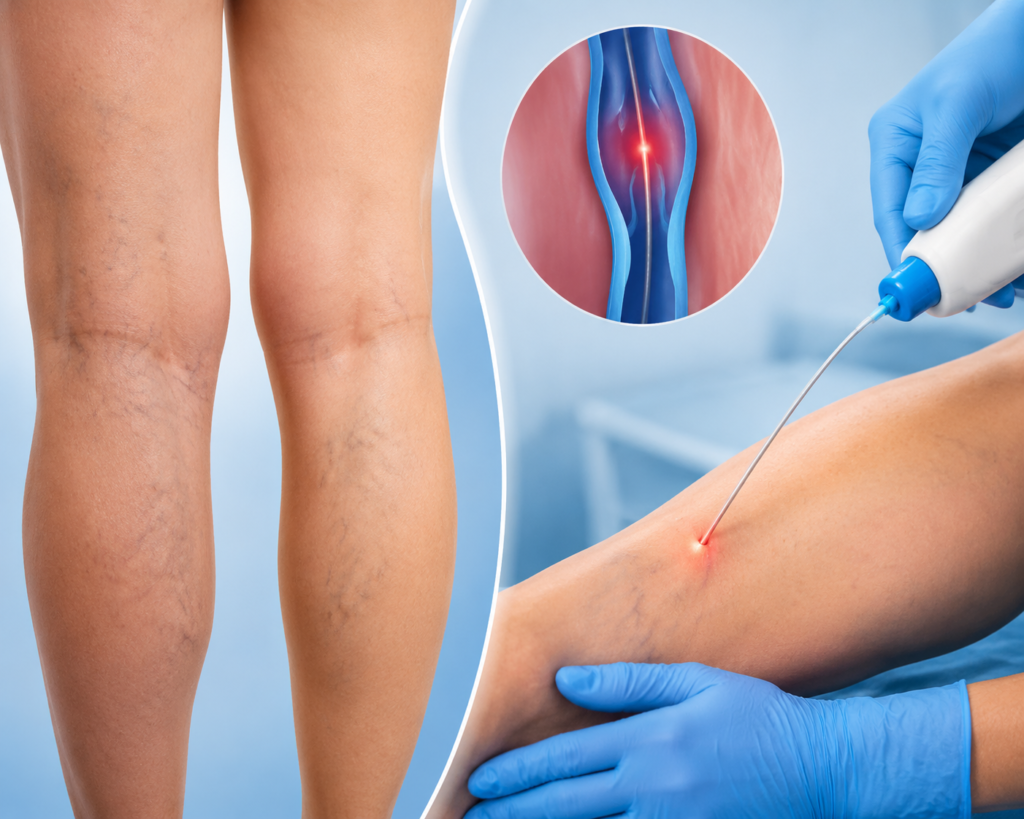
Varicose Vein Treatment in Melbourne
Treatment planning at Vein Care starts with an assessment, not a procedure. Your symptoms, vein anatomy, medical history, ultrasound findings and whether venous reflux is present all influence which treatment, if any, is appropriate for you.
The aim of treatment is to address veins that are not functioning normally and may be contributing to visible varicose veins, leg heaviness, aching, swelling, skin changes or discomfort.
In brief: Varicose vein treatment may involve ultrasound assessment, injection treatment, laser treatment, medical adhesive or removal of selected surface veins. The most appropriate option depends on your individual assessment.
When Should You See a Vein Specialist?
A vein assessment is worth arranging if varicose veins are becoming more visible, uncomfortable, or associated with any of the following:
- Aching or throbbing legs
- Leg heaviness or tiredness
- Swelling around the ankles
- Itching or burning around visible veins
- Cramping
- Skin discolouration
- Bulging or twisted veins
- Slow-healing wounds or ulceration
Treatment is not always required. Some patients come in because of appearance; others need clinical assessment because symptoms or skin changes may indicate underlying venous disease. Learn more about common varicose vein symptoms. If a varicose vein starts bleeding, apply firm direct pressure and elevate the affected leg if possible. Seek prompt medical attention, even if the bleeding stops. If bleeding is severe or cannot be controlled, call 000 immediately.
How Are Varicose Veins Assessed Before Treatment?
A visible varicose vein can be connected to another abnormal vein beneath the skin. Treatment planning based on appearance alone may miss the underlying problem.
During assessment, the clinician will review your:
- Symptoms and how long you have had them
- Medical history and relevant medications
- Previous vein procedures
- Work and activity requirements
- Pregnancy status, where relevant
- Treatment goals and expectations
Duplex ultrasound is often recommended to identify venous reflux, assess blood flow, and map abnormal veins before any treatment is planned.
What to Expect at Your First Appointment
First appointments at Vein Care typically run for 30 to 60 minutes. Here is what usually happens:
Step 1 – Clinical history The clinician will ask about your symptoms, how long you have had them, your medical history, any previous vein treatment, and your current medications.
Step 2 – Examination Visible veins are examined with you standing, which is the position that makes varicose veins most apparent.
Step 3 – Duplex ultrasound If clinically indicated and available, duplex ultrasound may be performed during the same appointment. The scan maps the vein anatomy and identifies whether reflux is present and where it originates.
Step 4 – Discussion The clinician explains the findings, outlines suitable treatment options and what each involves, and discusses risks, costs, Medicare eligibility and aftercare.
You are not required to proceed with any treatment at the first appointment. Patients may receive a summary of findings and a proposed treatment plan to consider after assessment.
Varicose Vein Treatment Options at Vein Care
The procedures below may be discussed after assessment. Suitability depends on your symptoms, ultrasound findings, vein anatomy and medical history.
Sclerotherapy
Sclerotherapy involves injecting a solution into selected veins to help them close over time. It may be considered for smaller varicose veins, reticular veins or residual visible veins after larger refluxing veins have been assessed or treated. More than one session may be needed depending on the number, size and location of the veins.
Microsclerotherapy
Microsclerotherapy is a refined form of sclerotherapy used for very small surface veins, including some spider veins and reticular veins. It uses a fine needle to inject a sclerosant into selected veins. The number of sessions depends on the number of visible veins, their size, their distribution and whether there is any deeper reflux contributing to the surface veins.
Ultrasound-Guided Sclerotherapy
Ultrasound-Guided Sclerotherapy - When abnormal veins are deeper or not clearly visible from the surface, sclerotherapy is performed under ultrasound guidance. The imaging allows the clinician to locate and treat veins that would not otherwise be accessible by injection alone.
Compare Treatment Options
The table below is general only. The treatment discussed at your appointment will depend on your ultrasound findings, symptoms, medical history and the number of veins being treated.
| Treatment | Commonly considered for | Anaesthetic | Typical appointment time | Recovery notes |
|---|---|---|---|---|
| Sclerotherapy | Smaller varicose veins, spider veins, reticular veins | Usually not required | Varies by session | Temporary tenderness, bruising or discolouration may occur |
| Ultrasound-guided sclerotherapy | Deeper abnormal veins | Usually not required | Varies by treatment plan | Compression and walking advice may be provided |
| EVLT | Selected larger abnormal veins | Local anaesthetic | Often longer than injection treatment | Bruising, tightness or tenderness may occur |
| Vein Glue | Selected abnormal veins | May not require tumescent anaesthetic | Varies by treatment plan | Suitability depends on anatomy and assessment |
| Ambulatory Phlebectomy | Bulging surface veins | Local anaesthetic | Varies by number of veins | Bruising, swelling or tenderness may occur |
What Are the Risks and Possible Side Effects of Varicose Vein Treatment?
Risks and temporary effects vary depending on the procedure, the veins being treated, the patient’s medical history and the number of treatment areas involved.
Possible temporary effects may include:
- Bruising
- Tenderness or swelling
- Tightness along a treated vein
- Skin discolouration or pigmentation changes
- Small firm areas along the treated vein
- Temporary altered sensation or numbness
- Local irritation or inflammation
- Discomfort at injection or catheter sites
Some risks are specific to the treatment being considered. These may include inflammation of a treated vein, pigmentation changes, allergic reactions, skin injury, infection or nerve irritation. Less common but potentially serious complications can include deep vein thrombosis and, rarely, pulmonary embolism. The likelihood and nature of complications vary by procedure and individual risk factors. Your clinician will explain the relevant risks, expected benefits and alternatives before treatment.
Before treatment, the clinician will explain:
- The expected benefits
- The limitations of the proposed treatment
- Possible temporary effects
- Relevant procedure-specific risks
- Alternative treatment options
- Aftercare requirements
- When to seek medical advice
No procedure is completely risk-free. Suitability should be assessed individually, and treatment should only proceed after the patient has had an opportunity to discuss the expected benefits, risks, alternatives and aftercare.
What Is the Best Treatment for Varicose Veins?
There is no single best treatment for every patient. The most suitable option depends on symptoms, ultrasound findings, vein anatomy, medical history, treatment goals and clinical suitability.
At Vein Care, treatment options are discussed only after assessment and, where clinically indicated, duplex ultrasound mapping. This helps identify whether a visible vein is connected to a deeper vein pattern that may be contributing to the problem.
Treatment planning may consider:
– the size and location of the abnormal veins
– whether venous reflux is present and where it originates
– symptoms and any skin changes
– previous vein treatment
– medical history and current medications
– work and activity requirements
– pregnancy status
– patient preferences and aftercare capacity
Your clinician may discuss options such as compression therapy, sclerotherapy, ultrasound-guided sclerotherapy, EVLT, cyanoacrylate vein glue or ambulatory phlebectomy, depending on the condition being assessed.
Can You Get Rid of Varicose Veins Without Traditional Surgery?
Established varicose veins usually do not disappear with creams, supplements or lifestyle changes alone. However, many varicose veins can be treated without traditional vein stripping.
Depending on assessment findings, treatment may involve closing or removing selected abnormal veins using sclerotherapy, ultrasound-guided sclerotherapy, endovenous laser treatment, cyanoacrylate vein glue or ambulatory phlebectomy.
Learn more about preventing varicose veins.
Can Lifestyle Changes Help Varicose Veins?
Lifestyle measures may help manage symptoms or reduce pressure in the legs, but they usually do not remove established varicose veins.
Depending on your situation, your clinician may discuss walking, calf-muscle activity, avoiding long periods of standing still, leg elevation, weight management and compression stockings. These measures are usually considered supportive care rather than a replacement for treating abnormal refluxing veins.
If symptoms are progressing, veins are becoming more visible, or skin changes are developing, a clinical assessment is recommended rather than relying only on self-care.
What Is Recovery Like After Treatment?
Recovery depends on the procedure, the number of veins treated and the patient’s usual work and activity level. Walking is encouraged after most outpatient vein procedures, but how much and how soon depends on the clinician’s instructions.
Compression stockings or bandaging may be required after some procedures.
Temporary effects can include:
- Bruising
- Tenderness or swelling
- Tightness along the treated vein
- Skin discolouration
- Temporary numbness
- Firm areas where the vein has been treated
Recovery varies between patients. Follow the written instructions provided at your appointment.
Seek urgent medical assessment if you develop sudden swelling, pain, warmth or redness in one leg after treatment. Call 000 immediately if you experience sudden breathlessness, chest pain, coughing up blood, fainting or collapse.
Varicose Vein Treatment Cost and Medicare
The total cost depends on:
- The consultation
- Whether ultrasound assessment is needed
- Treatment type and the number of veins treated
- Number of sessions required
- Medicare eligibility
- Private health cover, where applicable
Some treatments attract a Medicare benefit when clinical criteria are met. Cosmetic treatment is not covered. The clinic provides a personalised cost estimate after your assessment, so you know what to expect before committing to treatment.
Vein Assessment and Treatment in Melbourne
Vein Care provides assessment and treatment options for varicose veins and related venous conditions across Melbourne, with clinics in Camberwell, Boronia and Sydenham.
The practice is led by Dr Gurjit Dhillon (M.B.B.S., F.A.C.P.), a phlebologist with more than 25 years of medical experience. His clinical focus includes the assessment of venous conditions and minimally invasive treatment options where appropriate.
During your appointment, our team discusses your symptoms, medical history, ultrasound findings, suitable treatment options, expected outcomes, possible temporary effects, fees, Medicare eligibility and follow-up care to help you make an informed decision.
Address : Suite 307, 685 Burke Road, Camberwell VIC 3124
Appointments required.
Please confirm current availability when booking.
Address : 574 Melton Highway
Sydenham VIC 3037
Appointments required.
Please confirm current availability when booking.
Address : 157 Scoresby Road
Boronia VIC 3155
Appointments required.
Please call ahead to confirm current availability.
Consultation and treatment availability may vary between clinic locations. Please confirm available services at your preferred location when booking.
Book Your Vein Assessment Today
Speak with our experienced team to arrange a personalised vein assessment and discuss the most suitable treatment options for your condition.
Frequently Asked Questions
Varicose vein treatment refers to procedures used to close or remove selected abnormal superficial veins. The approach depends on symptoms, ultrasound findings, vein anatomy and medical history, not on appearance alone.
There is no single treatment that suits every patient. The most appropriate option is determined after assessment of symptoms, ultrasound findings, vein anatomy, previous treatment and medical history.
Many varicose veins can be treated with minimally invasive outpatient options including sclerotherapy, ultrasound-guided sclerotherapy, EVLT, vein glue or ambulatory phlebectomy, depending on suitability.
Duplex ultrasound is recommended when varicose veins are larger, symptoms are present, skin changes have developed, or venous reflux is suspected. It is the only way to map what is happening beneath the surface and identify whether a deeper vein is driving the visible problem.
The first appointment usually covers a clinical history, examination, duplex ultrasound if indicated, and a discussion of findings and treatment options. Most patients leave with a written summary and a treatment plan to consider at their own pace.
Treatment time varies by procedure, number of veins and whether ultrasound guidance is involved. The clinic provides a more accurate estimate after assessment.
Risks depend on the procedure, the veins being treated and the patient’s medical history. Possible effects may include bruising, tenderness, swelling, pigmentation changes, inflammation, firm areas along a treated vein or temporary altered sensation. Procedure-specific risks are discussed before treatment.
Walking is encouraged after most outpatient vein procedures. How much and when depends on the procedure and your clinician’s instructions.
Compression stockings or bandaging are required after some treatments. Whether they apply to you depends on the procedure and your care plan.
Some treatments attract a Medicare benefit when clinical criteria are met. Cosmetic treatment is not covered. Confirm your eligibility during consultation.
A treated vein may remain closed, but new varicose veins can develop elsewhere over time. New or ongoing symptoms warrant reassessment.
No. Results and recovery differ between patients. No treatment can guarantee a specific cosmetic or symptom outcome.
Sudden swelling, pain, warmth or redness in one leg may require urgent medical assessment for a possible blood clot. If you experience sudden breathlessness, chest pain, coughing blood, fainting, collapse or severe uncontrolled bleeding, call 000 immediately. Do not wait for a routine vein clinic appointment.