
Prevention
- Home
- Prevention
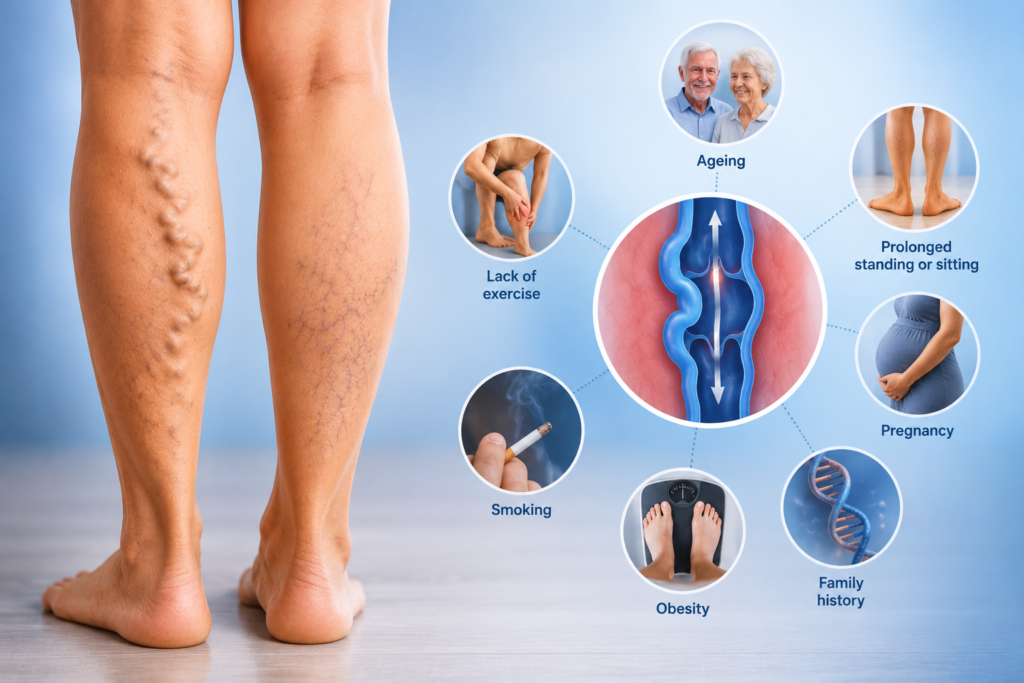
How to Prevent Varicose Veins
Prevention isn’t always possible. Family history, ageing, pregnancy, hormonal changes and vein valve weakness all play a part, and none of those can be changed with better habits. What healthy habits can do is reduce pressure in the leg veins, support circulation, and help manage early symptoms.
This page covers practical steps that may help lower risk and ease discomfort, along with when those steps stop being enough and a vein assessment is the better next step.
Key Takeaways
Prevention is not guaranteed: Varicose veins cannot always be prevented, particularly when family history, ageing, pregnancy or weakened vein valves are involved.
Healthy habits may help: Regular walking, movement breaks, leg elevation and weight management may support circulation and relieve symptoms. Compression stockings may help selected patients when recommended by a clinician.
Existing varicose veins do not disappear through lifestyle changes: Self-care measures may improve comfort but do not remove established varicose veins or reliably prevent progression.
Know when to seek medical assessment: Persistent aching, swelling or skin changes should be assessed. Bleeding from a vein, worsening leg ulcers or sudden one-sided leg swelling require prompt medical attention rather than routine self-care.
Can Varicose Veins Be Prevented?
Varicose veins cannot always be prevented. Factors such as family history, ageing, pregnancy and changes in vein valve function can increase the likelihood of developing them, even in people who maintain healthy lifestyles.
Varicose veins commonly develop when valves inside the leg veins do not function effectively, allowing blood to flow backwards and collect in superficial veins. This is known as venous reflux.
Although regular physical activity and healthy lifestyle habits may support leg circulation and help manage symptoms, there is no proven method that reliably prevents varicose veins from developing.
The aim of self-care is therefore to support vein health, improve comfort and recognise symptoms that may require clinical assessment.
Learn more about what causes varicose veins and the factors that may contribute to venous reflux.
What Are the Most Useful Habits for Vein Health?
Healthy daily habits may support blood circulation in the legs and help relieve symptoms associated with varicose veins, such as aching, heaviness and mild swelling. While these measures do not guarantee prevention, they can be useful for managing everyday discomfort.
1. Walk Regularly and Stay Active
Walking activates the calf muscles, which help move blood from the legs towards the heart.
Aim to include regular walking or other comfortable physical activity in your daily routine. The amount and intensity should depend on your mobility, health and symptoms.
2. Avoid Prolonged Sitting or Standing
Remaining in one position for extended periods may contribute to leg discomfort and swelling.
Take regular movement breaks, change positions and gently move your ankles when sitting for long periods.
3. Elevate Your Legs When Resting
Raising your legs while resting may help relieve feelings of heaviness and reduce mild swelling.
Find a comfortable, supported position rather than forcing your legs into an uncomfortable posture.
4. Maintain a Healthy Weight
Excess body weight may increase pressure on the venous system.
Maintaining a healthy weight, where relevant, may support general vascular health and reduce additional pressure on the leg veins.
5. Consider Compression Stockings When Recommended
Appropriately fitted compression stockings may help manage aching, heaviness or swelling in selected patients.
Compression is not suitable for everyone. A clinician can advise whether compression stockings are appropriate, particularly if you have other circulation problems.
6. Choose Comfortable, Low-Impact Exercise
Activities such as swimming, stationary cycling, gentle stretching and other suitable low-impact movements may help keep your leg muscles active.
Choose activities based on your comfort, mobility and medical history. Increase activity gradually if you have not been exercising regularly.
7. Pay Attention to Changes in Your Symptoms
Notice whether aching, swelling or heaviness becomes more frequent, affects daily activities or occurs alongside skin changes.
Persistent or worsening symptoms may warrant clinical assessment to determine whether venous disease or another condition is contributing.
These habits may improve comfort and support leg circulation, but they do not remove established varicose veins or reliably prevent new ones from developing.
How Does Movement Help Leg Vein Health?
The calf muscles work like a pump, pushing blood from the legs back toward the heart with every step. Stand or sit still for too long and blood tends to pool lower down, which is what makes legs feel heavy or swollen.
Short, frequent movement does more good than one long walk at the end of the day, particularly for anyone sitting or standing for hours at work.
A few ways to build it in:
- A short walk between tasks or meetings
- Calf raises while waiting for the kettle to boil
- Ankle circles while seated
- A gentle stretch after a long stint at a desk
- walking after a long flight or drive, where practical
Desk jobs, retail, healthcare, hospitality and driving roles all tend to involve exactly the kind of stillness that’s worth planning around.
Which Exercises Support Healthy Leg Veins?
Low-impact activities that engage the calf muscles may help support venous return and relieve symptoms such as leg heaviness or swelling. Walking, swimming, cycling and gentle stretching are examples. The most suitable activity depends on your comfort, mobility, medical history and current symptoms.
Activities worth considering:
Swimming or aqua exercise: Provides gentle movement with minimal impact on the joints.
Cycling or stationary cycling: Engages the leg muscles and supports circulation.
Gentle yoga or mobility stretching: Encourages regular movement and flexibility.
Light resistance training: May be suitable depending on your physical condition and clinical advice.
Start gradually if you are not currently active. If you experience sudden leg swelling, new calf pain, redness or warmth, seek prompt medical assessment rather than continuing exercise. If chest pain or sudden breathlessness occurs, call 000.
How Can You Support Vein Health at Work?
Whether your work involves prolonged sitting or standing, regular movement and changing position may help reduce leg discomfort and support circulation.
If You Mainly Sit at Work
Stand up regularly: Take short movement breaks, ideally every hour or when practical.
Move your ankles: Perform gentle ankle movements or calf pumps while seated.
Avoid sitting in one position for too long: Change your sitting position regularly rather than remaining still.
Support your feet: Keep your feet comfortably supported rather than dangling.
If You Mainly Stand at Work
Change your position: Shift your weight and avoid standing completely still for extended periods.
Walk when possible: Short walking breaks help activate the calf muscles.
Wear comfortable footwear: Choose supportive, properly fitted shoes.
Elevate your legs after work: Resting with your legs raised may help relieve heaviness or mild swelling.
If aching, heaviness or swelling regularly worsens during or after work, consider arranging a clinical assessment to determine whether venous disease or another condition may be contributing.
Can Weight Management Help Prevent Varicose Veins?
Carrying less weight can ease pressure on the leg veins and support circulation generally, but weight is only one factor among several, and varicose veins show up in people of every body size. For some, weight management helps with heaviness, swelling or discomfort; for others, it makes little difference because the bigger driver is genetics or vein valve function.
This isn’t about appearance. It’s about reducing pressure on the lower limbs and supporting overall health, and it’s worth approaching that way:
- Regular walking or low impact exercise
- Balanced meals with enough fibre
- Cutting down long sedentary stretches
- Working with your GP on related health conditions
Do Compression Stockings Prevent Varicose Veins?
They can ease aching, swelling or heaviness for some people, but they won’t prevent every varicose vein from forming, and they won’t undo veins that already exist. Proper fitting matters, and so does following clinical advice, particularly during pregnancy or when symptoms are already present.
Compression often comes up for:
- Leg heaviness or end of day swelling
- Long periods of standing
- Travel
- Pregnancy-related leg symptoms
- Symptom management while waiting for a review
- After certain vein procedures, if recommended
Not everyone should use compression stockings without checking first, people with circulation problems, diabetes-related foot concerns, skin wounds or reduced sensation should get clinical advice before starting.
Can Leg Elevation Help With Varicose Vein Symptoms?
Lifting your legs above heart level for a while takes pressure off the lower legs and can ease swelling, heaviness or aching, useful after a long day standing, sitting or travelling.
A few practical ways to use it:
- Elevate your legs for 15–20 minutes after work
- Build it into rest breaks rather than saving it for bedtime
- Pair it with regular walking rather than relying on elevation alone
- Mention persistent swelling to a clinician rather than just managing around it
Sudden, painful, one-sided swelling, especially with redness, warmth, chest pain or shortness of breath, needs urgent medical care, not home elevation.
How Can You Help Prevent Varicose Veins During Pregnancy?
Pregnancy brings hormonal changes, more blood volume, and more pressure on the pelvic and leg veins, all of which can bring on new varicose veins or make existing ones more noticeable. Movement, leg elevation, avoiding long stretches of standing, and compression stockings when advised all help manage symptoms during this time.
For many people, pregnancy related varicose veins ease up after birth. Still, worth flagging to a clinician if symptoms are painful, getting worse, or showing up with swelling or skin changes.
Things that tend to help:
- Walking regularly, if it’s comfortable
- Resting with your legs elevated
- Avoiding long periods on your feet
- Asking about pregnancy safe sleep and resting positions
- Wearing pregnancy appropriate compression if your clinician recommends it
During pregnancy, sudden swelling, pain, warmth or redness in one leg requires urgent medical assessment. If you experience sudden breathlessness, chest pain, coughing up blood, fainting or collapse, call 000 immediately.
Learn more about varicose veins during pregnancy.
Can Lifestyle Changes Stop Existing Varicose Veins Getting Worse?
Lifestyle measures such as regular movement, leg elevation and appropriately fitted compression stockings may help relieve symptoms such as aching, heaviness or swelling in selected patients.
However, these measures do not remove existing varicose veins or reliably prevent them from progressing. Some people may experience worsening symptoms despite following healthy lifestyle habits.
If symptoms persist, worsen or affect daily activities, a clinical assessment can help determine whether underlying venous reflux is contributing and whether further investigation or treatment may be appropriate.
If symptoms continue despite self-care, learn about varicose vein treatments and how clinical assessment helps determine suitable options.
When Are Self-Care Measures Not Enough?
Self-care measures may help relieve mild symptoms, but persistent or worsening discomfort should be assessed to determine whether venous disease or another condition is contributing.
When to Arrange a Routine Vein Assessment
Consider arranging a clinical assessment if you experience:
Persistent aching or heaviness
Recurrent ankle swelling
Painful or increasingly prominent varicose veins
Itching or skin irritation around visible veins
Gradual skin discolouration or eczema-like changes
Symptoms affecting work, sleep or daily activities
When to Seek Prompt Medical Assessment
Do not wait for a routine vein clinic appointment if you experience:
Sudden swelling, pain, warmth or redness in one leg
New or significant calf pain
Bleeding from a varicose vein
A worsening leg ulcer or an open wound
Spreading redness, fever or increasing pain around a leg wound
Sudden one-sided leg swelling or pain may indicate deep vein thrombosis (DVT), which requires urgent medical assessment.
If a varicose vein begins bleeding, apply firm direct pressure and elevate the leg if possible. Seek urgent medical assistance.
When to Call 000
Call 000 immediately for:
Sudden breathlessness or difficulty breathing
Chest pain
Coughing up blood
Fainting or collapse
Severe or uncontrolled bleeding
These symptoms may indicate a serious medical emergency and should not wait for a routine vein appointment.
Learn more about varicose vein symptoms and when clinical assessment may be appropriate.
How Are Varicose Vein Risk and Symptoms Assessed?
Assessment usually means a clinical history, a physical exam, and duplex ultrasound where it’s warranted, the goal being to understand your symptoms, check whether venous reflux is present, and decide whether monitoring, prevention, or treatment is the right next step.
Expect questions about:
- Family history of varicose veins
- Pregnancy history, where relevant
- How much standing or sitting your work involves
- Previous vein treatment
- Pain, swelling or heaviness
- Skin changes or wounds
- Medications and medical conditions
- Previous blood clots or circulation concerns
Duplex ultrasound maps the veins beneath the skin and checks how blood is actually flowing.
Learn more about vascular ultrasound and mapping.
When Is Varicose Vein Treatment Discussed?
Once symptoms, ultrasound findings, vein anatomy and medical history suggest prevention measures aren’t going to be enough on their own. Treatment isn’t chosen by appearance alone, it follows from understanding the underlying vein pattern.
Worth discussing treatment if you have:
- Persistent aching or heaviness
- Recurrent swelling
- Painful bulging veins
- Skin discolouration
- Venous eczema
- Slow healing wounds
- New or recurrent veins after previous treatment
Explore varicose vein treatment options.
Address : Suite 307, 685 Burke Road Camberwell VIC 3124
Appointments required.
Please confirm current availability when booking.
Address : 574 Melton Highway
Sydenham VIC 3037
Appointments required.
Please confirm current availability when booking.
Address : 157 Scoresby Road
Boronia VIC 3155
Appointments required.
Please call ahead to confirm current availability.
Consultation and treatment availability may vary between clinic locations. Please confirm available services at your preferred location when booking.
Frequently Asked Questions
No. Family history, ageing, pregnancy and vein valve weakness all contribute, and none of those respond to lifestyle changes. Good habits help manage risk and symptoms, but they can’t guarantee prevention.
Mostly, avoiding long stretches of stillness. Regular walking, movement breaks, leg elevation, weight management and compression stockings when advised all help reduce vein pressure.
Walking supports circulation by activating the calf muscles and may help relieve symptoms such as heaviness or swelling. However, walking has not been proven to prevent varicose veins from developing.
It can contribute to leg heaviness or swelling because the calf muscles aren’t being activated, but sitting alone isn’t the whole story. Regular movement breaks help either way.
For some people, yes, standing still tends to worsen aching, heaviness or swelling. Changing position, walking when you can, and elevating your legs afterward all help.
They can ease swelling or heaviness, but they don’t guarantee prevention and won’t remove veins that already exist. Get them properly fitted and use them as advised.
Not established ones. Low-impact activity like walking, cycling or swimming supports circulation and can ease symptoms, but a visible vein may still need assessment if it persists or worsens.
It can ease pressure on the leg veins, but it’s not a guarantee, varicose veins occur in people of every body size, since genetics, pregnancy and vein valve function matter just as much.
Movement, leg elevation, avoiding long stretches of standing, and compression stockings if your clinician recommends them. Flag anything painful, sudden or worsening rather than waiting it out.
If they’re painful, worsening, bleeding, swollen, showing skin changes, or affecting work, sleep or activity. Seek urgent care for sudden swelling, severe pain, warmth, redness, chest pain or shortness of breath.