
Sclerotherapy and Microsclerotherapy
- Home
- Sclerotherapy and Microsclerotherapy
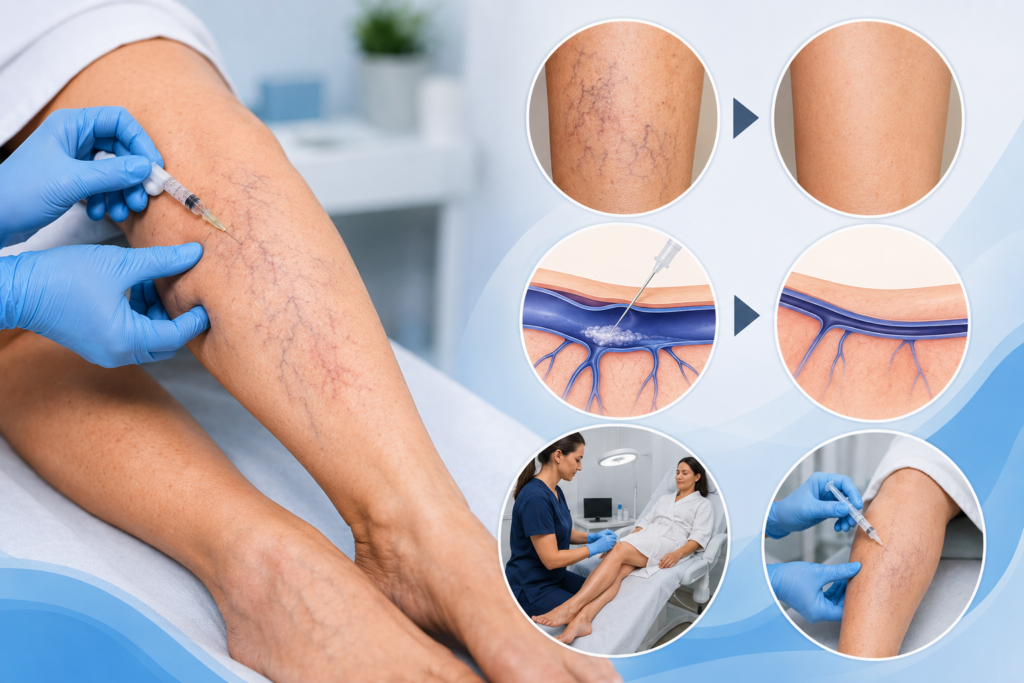
Sclerotherapy and Microsclerotherapy in Melbourne
Sclerotherapy is a minimally invasive vein treatment that uses a fine needle to inject a sclerosant into a selected abnormal vein. The aim is to close that vein, which can then become less visible over time as the body absorbs it.
Microsclerotherapy applies the same idea to smaller spider and reticular veins. Treatment suitability depends on the vein pattern, your symptoms, the skin around it, your medical history, and whether a larger feeder vein or deeper reflux is part of the picture.
At Vein Care, assessment is what determines whether direct-vision sclerotherapy, microsclerotherapy, ultrasound-guided treatment, or a different pathway altogether makes sense for you.
Key Takeaways
- Sclerotherapy uses an injected solution to treat selected abnormal veins.
- Microsclerotherapy is generally for smaller, visible spider and reticular veins.
- Direct vision treatment works on veins you can see at the surface.
- Duplex ultrasound may come into play when veins are larger, deeper, or show signs of reflux.
- Some patients may require more than one session.
- Treated veins fade gradually, and new ones can still develop later.
- Temporary effects and rarer complications should be discussed before you go ahead.
When Might Sclerotherapy Be Considered?
Sclerotherapy may be considered for selected visible leg veins, including:
- Spider veins
- Reticular veins
- Selected small surface varicose veins
- Residual visible veins after previous treatment
- Recurrent visible veins needing reassessment
- Veins causing local aching, burning or discomfort
Treatment suitability depends on clinical assessment, the vein pattern, your symptoms, the skin condition, and whether something larger is feeding the vein you can see.
What Is Microsclerotherapy?
Microsclerotherapy is a form of sclerotherapy used to treat selected small, visible veins, particularly spider veins and reticular veins.
The procedure involves injecting small amounts of a sclerosant solution into targeted surface veins using a very fine needle. The aim is to close the treated veins so they gradually become less visible.
Treatment suitability depends on the size and location of the veins, the patient’s medical history and whether underlying venous reflux is present. Some patients may require more than one treatment session.
What Is the Difference Between Sclerotherapy and Microsclerotherapy?
Mainly the size and visibility of what’s being treated.
| Feature | Sclerotherapy | Microsclerotherapy |
|---|---|---|
| Typical Vein Type | Selected surface or small varicose veins | Spider veins and small reticular veins |
| Visibility | Visible, or assessed with imaging | Usually visible at the skin surface |
| Needle | Fine | Very fine |
| Guidance | Direct vision or ultrasound, depending on the vein | Usually direct vision |
| Treatment Area | Individual or grouped veins | Often networks of small surface veins |
| Sessions | May be staged | May be staged |
What Veins Can Sclerotherapy Treat?
Spider veins, reticular veins and selected smaller surface varicose veins are the usual candidates. Large bulging veins or major truncal reflux generally aren’t.
Spider Veins
Fine red, blue or purple vessels close to the skin. Microsclerotherapy is often considered when these are suitable for injection.
Reticular Veins
Usually blue or green, larger than spider veins but smaller than prominent varicose veins. They sometimes act as feeder veins for nearby spider-vein networks.
Small Surface Varicose Veins
Selected small tributaries can sometimes be treated this way, depending on their anatomy and whether something larger is contributing.
Deeper or Non-visible Veins
If a vein can't be clearly identified at the surface, it usually needs duplex ultrasound and a separate ultrasound-guided treatment plan.
How Does Sclerotherapy Work?
A measured amount of sclerosant goes into the selected vein, producing a controlled reaction in the lining that’s meant to close it off and stop blood flowing through.
What typically happens:
- Identifying the vein to be treated
- Cleaning the area
- Placing a fine needle into the selected vein
- Injecting a measured amount of sclerosant
- Pressure, dressings or compression, where recommended
- Walking and aftercare instructions specific to you
Change is usually gradual rather than instant, how quickly depends on vein size, the method used, and your own healing response. Some veins need further injections or staged treatment.
What Is Sclerotherapy?
Sclerotherapy is an injection-based treatment for selected abnormal superficial veins. A clinician injects a sclerosant solution or foam into the vein to produce a controlled reaction in its lining, aiming to close the treated vein.
Depending on the type, size and location of the vein, treatment may be performed under direct vision or with ultrasound guidance.
Sclerotherapy may be considered for spider veins, reticular veins, selected smaller varicose veins and some residual or recurrent veins after clinical assessment.
It is not appropriate for every vein pattern. Larger refluxing veins may require a different treatment approach.
How Long Does It Take to See a Change?
Gradual, generally, not instant. Smaller veins tend to respond sooner than larger ones, and bruising, pigmentation or firm areas can stick around while everything heals. Better Health Victoria notes leg veins can take months to resolve after sclerotherapy, depending on size.
The time required for visible improvement varies between patients and depends on factors such as vein size, treatment method and individual healing response. Your clinician can discuss expected changes and appropriate follow-up based on your treatment plan.
How Are Veins Assessed Before Sclerotherapy?
Generally a medical history, a review of symptoms, and an examination of the visible veins. Duplex ultrasound gets added when symptoms, larger veins, previous treatment, or the vein pattern itself suggest there’s a reflux source underneath.
Expect questions like:
- When did the veins first appear?
- Are they changing or spreading?
- Aching, heaviness, itching, burning or swelling?
- Previous vein procedures?
- Pregnancy history, where relevant
- Previous blood clots?
- Current medicines and allergies
- Skin changes or wounds?
- Work involving a lot of sitting or standing?
- Relevant heart, circulation or medical conditions?
Surface treatment alone can fall short if an important feeder vein hasn’t been identified, which is why assessment focuses on the pattern underneath, not just what’s visible.
Learn more about vascular ultrasound and vein mapping.
Is Ultrasound Needed Before Sclerotherapy?
Not for everyone. Direct vision sclerotherapy and microsclerotherapy often proceed without it.
Duplex ultrasound is more likely to come up when there are:
- Larger varicose veins
- Significant aching, heaviness or swelling
- Skin changes
- Previous vein treatment
- Recurrent veins
- A pattern suggesting deeper reflux
- A history of blood clots or other circulation concerns
Direct vision treatment generally suits veins you can clearly see at the surface. Ultrasound guided sclerotherapy is the separate technique used for veins beneath the skin.
Learn more about ultrasound-guided sclerotherapy
What Are the Potential Benefits of Sclerotherapy?
Where it’s clinically appropriate, sclerotherapy offers a way to treat selected veins without surgical incisions.
Potential benefits:
- Treating selected spider, reticular and surface veins
- Outpatient setting
- No general anaesthetic for standard direct-vision treatment
- A plan tailored to your specific visible vein pattern
- Several veins treated in one session
- Staged treatment when a larger area is involved
- Possible improvement in the appearance of treated veins
- Possible improvement in local symptoms, for suitable patients
These vary between patients. Treatment can’t guarantee complete clearance, stop new veins from forming, or produce the same result for every vein pattern.
What Are the Limitations of Sclerotherapy?
Sclerotherapy is not suitable for every patient or vein pattern.
Important limitations include:
- Not every injected vein responds completely
- More than one session may be needed
- Improvement is usually gradual, not immediate
- Larger or deeper veins may need a different treatment
- Underlying reflux sometimes needs addressing before surface veins
- Temporary pigmentation can linger for a while
- New spider or varicose veins can still develop later
- Results vary by vein size, anatomy and healing
- Treatment of selected veins does not prevent venous disease from progressing elsewhere
What Are the Risks and Side Effects of Sclerotherapy?
As an injection treatment, sclerotherapy carries possible side effects and complications worth covering as part of informed consent.
Temporary local effects:
- Redness
- Bruising
- Tenderness
- Itching or irritation
- Small firm areas or trapped blood
- Swelling around an injection site
- Brown pigmentation
- Fine new surface vessels around the treated area
Less common complications:
- Skin injury or ulceration
- Persistent pigmentation
- Inflammation of a treated vein
- Allergic reaction
- Superficial blood clots
- Deep vein thrombosis
- Infection
- Telangiectatic matting
- Incomplete treatment or recurrence
Seek immediate medical assessment if you develop sudden swelling, pain, warmth or redness in one leg after sclerotherapy, as these symptoms may indicate deep vein thrombosis or another complication.
Call 000 immediately if you experience sudden breathlessness, chest pain, coughing up blood, fainting, collapse, new stroke-like symptoms or signs of a severe allergic reaction, such as difficulty breathing or swelling of the tongue or throat.
Contact your treating clinician promptly about increasing local pain, redness, skin changes or other unexpected symptoms.
A Note on Foam Sclerotherapy
Foam sclerotherapy is a distinct technique, often used with ultrasound guidance for selected deeper veins, and its risk profile differs from direct vision microsclerotherapy.
If you’re considering ultrasound guided foam treatment, you should get procedure-specific information about what to expect, less common complications, and when to seek care. NICE specifically advises that consent for foam sclerotherapy cover temporary effects such as chest tightness, dry cough, headache and visual disturbance, alongside rare but significant neurological or cardiovascular complications.
Who May Not Be Suitable for Sclerotherapy?
This needs an individual assessment, treatment may be postponed, modified or avoided depending on your history and vein type.
Tell the clinician if you:
- Are pregnant, breastfeeding or planning pregnancy
- Have had a previous blood clot
- Have significant arterial or circulation problems
- Have an active infection or wound near the treatment area
- Have reacted to a sclerosant before
- Have reduced mobility
- Take anticoagulant or antiplatelet medicines
- Have heart, lung, neurological or other significant medical conditions
- Have diabetes related foot or circulation concerns
Don’t stop prescribed medicines unless your prescribing doctor tells you to.
What Happens at a Sclerotherapy Appointment?
Depends on whether it’s assessment, direct-vision treatment, microsclerotherapy, or an ultrasound-guided procedure.
A treatment appointment usually covers:
- Confirming medical history and consent
- Reviewing the treatment plan
- Examining and marking the veins
- Cleaning the skin
- Injecting selected veins
- Pressure, dressings or compression, as needed
- A period of walking afterward, where advised
- Written aftercare instructions to take home
Some people have a separate assessment first; others go straight to treatment once suitability and the vein pattern are confirmed.
How Should You Prepare for Sclerotherapy?
Depends on the planned procedure and your history. You might be asked for a current medicine list, to skip moisturiser or fake tan on the area, to wear loose clothing, and to bring compression stockings if recommended.
Don’t stop medication, add new medicines, or change travel plans based on general online information ,follow what’s specific to your planned treatment.
Full preparation guidance here:
What Should You Expect After Sclerotherapy?
Walking is often encouraged, and compression may be recommended depending on what was treated and your clinician’s instructions.
Temporary effects:
- Bruising
- Redness
- Tenderness
- Pigmentation changes
- Small firm areas
- Mild local irritation
Recovery instructions vary by patient and procedure ,how long for compression, when to resume exercise, travel, sun exposure and follow up are all individual.
Full aftercare guidance here:
How Many Sclerotherapy Sessions Will You Need?
The number of sessions varies between patients. It comes down to the number, size and location of the veins, whether feeder veins are involved, and how the treated veins respond.
Factors affecting the number of sessions include:
- Size of the treatment area
- Number of visible veins
- Whether both legs are involved
- Reticular feeder veins present
- Previous vein treatment
- Underlying venous reflux
- Skin response and pigmentation
- How much can reasonably be treated in one visit
- Your own preference for staged treatment
Further sessions might be discussed if selected veins are still visible or haven’t fully closed.
Is Sclerotherapy Permanent?
Sclerotherapy aims to close selected abnormal veins, which may gradually become less visible. Successfully treated veins may remain closed, but not every vein responds completely, and some veins may persist or reopen over time.
New spider veins, reticular veins or varicose veins can also develop because of factors such as ageing, hormonal changes, family history and underlying venous reflux.
Sclerotherapy cannot guarantee permanent clearance or prevent all new veins from developing. Follow-up assessment or additional treatment may be appropriate for some patients.
How Does Sclerotherapy Compare With Other Vein Treatments?
Comes down to vein type, symptoms, anatomy and ultrasound findings.
| Treatment | Common role |
| Microsclerotherapy | Small spider and reticular veins |
| Direct vision sclerotherapy | Selected visible surface veins |
| Ultrasound-guided sclerotherapy | Selected deeper veins, guided by ultrasound |
| EVLT | Selected larger refluxing veins |
| Vein glue | Selected abnormal truncal veins |
| Ambulatory phlebectomy | Selected raised surface veins, removed through small openings |
| Monitoring or compression | Symptom support, or when intervention isn’t currently the priority |
For confirmed truncal venous reflux, treatment options may include endovenous thermal ablation, ultrasound-guided foam sclerotherapy or other interventions, depending on clinical suitability and individual circumstances. Treatment decisions should be based on clinical assessment and ultrasound findings rather than the appearance of visible veins alone.
Compare the broader varicose vein treatment options.
Lifestyle measures such as regular movement, leg elevation and appropriately fitted compression stockings may help manage symptoms in selected patients, but they do not remove established varicose veins. For further information, read our guide to varicose vein prevention and self-care.
How Much Does Sclerotherapy Cost in Melbourne?
Depends on the assessment required, vein pattern, treatment area, number of sessions, and whether ultrasound guidance or another procedure is involved.
Costs to discuss before treatment include:
- Consultation or assessment fees
- Ultrasound fees, where applicable
- Treatment fees
- Compression garments
- Follow-up appointments
- Possible staged treatment
- Potential Medicare or insurance arrangements
A personalised estimate comes once the clinician understands the veins involved and the proposed plan.
Clinical Approach at Vein Care
The starting point is identifying the vein type and any underlying reflux before recommending anything, sometimes that’s clinical examination alone, sometimes it’s duplex ultrasound when symptoms or the vein pattern point that way.
Factors considered during assessment include:
- The visible vein pattern
- Symptoms
- Medical history
- Skin condition
- Previous procedures
- Ultrasound findings, where available
- Risks and limitations
- Alternative management options
- Your own preferences
Learn more about Vein Care and Dr Gurjit Dhillon.
Address : Suite 307, 685 Burke Road Camberwell VIC 3124
Appointments required.
Please confirm current availability when booking.
Address : 574 Melton Highway
Sydenham VIC 3037
Appointments required.
Please confirm current availability when booking.
Address : 157 Scoresby Road
Boronia VIC 3155
Appointments required.
Please call ahead to confirm current availability.
Consultation and treatment availability may vary between clinic locations. Please confirm available services at your preferred location when booking.
Frequently Asked Questions
A minimally invasive treatment where a sclerosant solution is injected into a selected abnormal vein. The aim is to close the vein, which can gradually become less visible.
The same underlying process as sclerotherapy, using very fine needles on smaller visible spider and reticular veins.
Often, yes, for suitable leg spider veins. Assessment confirms whether they’re isolated or connected to larger feeder veins or underlying reflux.
Not automatically. Larger or deeper veins typically need ultrasound-guided treatment, EVLT, vein glue, phlebectomy or another pathway, depending on assessment.
Varies by person, a pinprick, some stinging or burning during injection, and tenderness afterward for some. Your clinician can talk you through what to expect.
Standard direct-vision sclerotherapy usually doesn’t need general anaesthesia. Other procedures or combined plans may differ.
Depends on the extent and size of the veins, whether feeder veins are involved, and how they respond. Staged or repeat treatment is common.
Not everyone does. It tends to come up with larger veins, significant symptoms, swelling, skin changes, previous treatment, or signs of deeper reflux.
Yes, sometimes. Treated veins fade, but new ones can develop later, sclerotherapy treats what’s currently visible, not every vein you might ever get.
Bruising, redness, tenderness, itching, pigmentation, small firm areas and fine new vessels near the treatment site are common. Less common: skin injury, allergic reaction, inflammation, blood clots.
Usually, yes, walking is often encouraged. Specific timing and activity instructions come from your treating clinician.
Possibly, depending on the vein type and treatment performed. The right garment and duration get specified in your individual aftercare.
Tell your clinician if you’re pregnant, breastfeeding or planning pregnancy, treatment timing may need to shift. Get individual advice before booking.
Depends on the service, the clinical circumstances and current Medicare requirements. Purely cosmetic treatment generally won’t attract a benefit. Vein Care can talk through likely fees and any rebate considerations after assessment.
Contact Vein Care before booking to confirm whether a referral is needed for your appointment or any potential Medicare arrangements.
Camberwell, Sydenham and Boronia, all appointment-based. Assessment determines whether sclerotherapy, microsclerotherapy or another option suits you.