Skip to content

Ultrasound Guided Sclerotherapy (UGS)
- Home
- Ultrasound Guided Sclerotherapy (UGS)
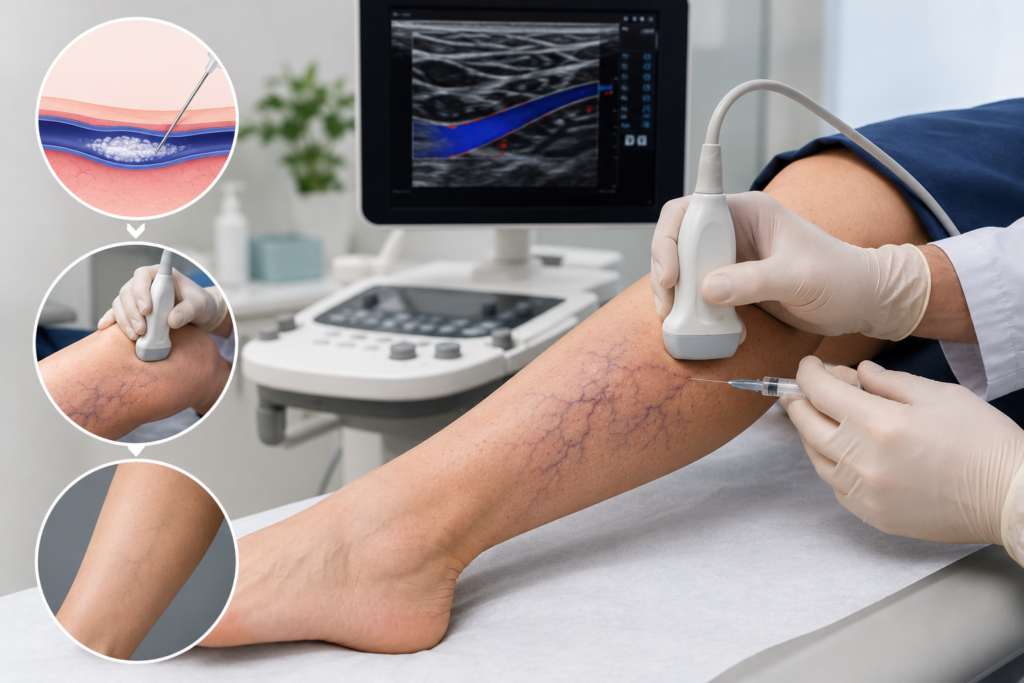
Ultrasound-Guided Sclerotherapy (UGS) in Melbourne
Ultrasound-guided sclerotherapy (UGS) is an injection-based procedure used to treat selected abnormal superficial veins, including certain varicose veins beneath the skin. Real-time ultrasound imaging helps the clinician identify the targeted vein and guide the injection of a sclerosant, with the aim of closing the vein. Ultrasound-guided foam sclerotherapy is one form of UGS. Depending on vein anatomy, symptoms and clinical assessment, it may be considered for selected patients with superficial venous reflux or residual and recurrent varicose veins.
What Is Ultrasound-Guided Sclerotherapy?
Ultrasound-guided sclerotherapy is a medical procedure that uses ultrasound imaging to identify selected abnormal veins and guide the injection of a sclerosant. The solution causes a controlled reaction in the lining of the treated vein. This aims to close the vessel, allowing it to gradually shrink or become less prominent as the body responds to treatment.
Unlike direct-vision sclerotherapy, which is commonly performed on veins visible near the skin surface, UGS allows clinicians to identify and access selected superficial veins that are not easily visible externally. The procedure treats suitable abnormal veins within the superficial venous system. It is not a routine treatment for deep vein thrombosis (DVT) or blood clots within the deep venous system.
What Is Ultrasound-Guided Foam Sclerotherapy?
In foam sclerotherapy, a sclerosant is prepared as a foam before being injected into a selected abnormal vein.
The foam comes into contact with the vein lining and produces a reaction intended to close the vein. When performed under ultrasound guidance, imaging helps the clinician monitor the injection and distribution of the foam.
The suitability of foam treatment depends on clinical findings, vein anatomy, medical history and the risks associated with the procedure.
Foam and liquid sclerosants have different technical characteristics and potential complications. The treating clinician should explain the specific technique proposed before treatment.
Which Varicose Veins May Be Suitable for UGS?
UGS may be considered for certain abnormal superficial veins when ultrasound guidance is needed to identify the vein or guide an injection.
Selected Varicose Veins
Varicose veins are enlarged or twisted superficial veins that may cause aching, heaviness, swelling, itching or skin changes. Some varicose veins develop because of venous reflux, which occurs when valves within the veins do not function effectively and blood flows backwards.
UGS may be suitable for selected refluxing superficial veins. However, larger veins or particular patterns of reflux may be better managed using another treatment approach.
Veins Beneath the Skin Surface
Some abnormal superficial veins are not readily visible through the skin. Duplex ultrasound can help identify their location, size and relationship to other veins. Where treatment is clinically appropriate, ultrasound guidance allows the clinician to target the intended vessel during injection.
Residual or Recurrent Varicose Veins
Some patients develop persistent or recurrent varicose veins following previous treatment. A new clinical examination and ultrasound assessment may help identify residual reflux, newly developed abnormal veins or changes in the venous system. UGS may be considered for selected residual or recurrent veins, although further intervention is not always necessary.
Selected Tributary Veins
Tributary veins are branches of larger superficial veins.
Some abnormal tributaries may be suitable for ultrasound-guided injection treatment, depending on their location, size and connection to other veins. The assessment considers the broader venous anatomy rather than focusing only on an individual visible vein.
Ultrasound-Guided vs Direct-Vision Sclerotherapy
Both ultrasound-guided and direct-vision sclerotherapy involve injecting a sclerosant into selected abnormal veins. The main difference is how the clinician identifies the vein and guides the injection.
| Feature | Ultrasound-Guided Sclerotherapy | Direct-Vision Sclerotherapy |
|---|---|---|
| Vein identification | Real-time ultrasound imaging | Direct visual examination |
| Typical targets | Selected less-visible superficial veins | Selected visible surface veins |
| Injection guidance | Ultrasound-guided | Direct vision |
| Sclerosant | Liquid or foam, depending on the proposed technique | Often liquid for smaller surface veins |
| Ultrasound | Integral to the procedure | Used when clinically indicated |
| Main limitation | Not suitable for all venous conditions | May not address underlying refluxing veins |
What Is the Difference Between Liquid and Foam Sclerotherapy?
Liquid and foam describe the form in which the sclerosant is administered. Ultrasound guidance describes how the injection is directed into the vein. Therefore, foam sclerotherapy and ultrasound-guided sclerotherapy are not mutually exclusive treatments.
The clinician selects the technique according to the vein anatomy, treatment objective, relevant risks and individual medical circumstances. Patients researching treatment for smaller visible spider or reticular veins can learn more about sclerotherapy and microsclerotherapy in Melbourne.
Clinical Assessment and Duplex Ultrasound
A clinical assessment helps determine whether UGS is appropriate, whether another treatment is preferable or whether intervention is necessary.
The clinician may review:
Leg symptoms, including aching, heaviness or swelling
Visible varicose veins and associated skin changes
Medical history and current medications
Previous venous procedures
Previous blood clots or circulation problems
Relevant allergies and other medical conditions
Mobility and individual risk factors
Patient preferences and treatment concerns
Why Is Duplex Ultrasound Important?
Duplex ultrasound provides information about vein anatomy and blood flow.
It may help identify:
Abnormal superficial veins
Venous reflux
The direction of blood flow
Connections between affected veins
Relevant deeper vein anatomy
Residual or recurrent abnormalities following previous treatment
These findings help the clinician determine which veins may be contributing to symptoms and whether the anatomy is suitable for UGS.
An abnormal ultrasound finding does not automatically mean a procedure is required.
How Is the Treatment Approach Selected?
Treatment selection depends on the nature of the venous condition, including whether reflux affects smaller tributaries or larger superficial veins. For some patients with significant reflux in a main superficial vein, endovenous thermal treatment or another intervention may be more appropriate than UGS. Clinical findings, expected benefits, possible complications, alternatives and patient preferences should all be considered.
How Is Ultrasound-Guided Sclerotherapy Performed?
Ultrasound-guided sclerotherapy uses real-time ultrasound imaging to identify selected abnormal superficial veins and guide the injection of a sclerosant. The treatment technique depends on the affected veins, the type of sclerosant and individual clinical findings.
A typical procedure may involve:
Clinical review: The clinician confirms the patient’s medical history, treatment plan, relevant risks and informed consent.
Ultrasound mapping: Duplex ultrasound is used to identify the targeted veins and assess their anatomy.
Skin preparation: The treatment area is cleaned before the procedure.
Needle placement: Real-time ultrasound imaging helps guide a needle into the selected vein.
Sclerosant injection: The prescribed liquid or foam sclerosant is injected using ultrasound guidance.
Post-treatment care: Dressings or compression may be applied where appropriate, followed by individual aftercare instructions.
The number of injections, procedure duration and need for further sessions depend on the veins being treated and the patient’s response. Your clinician will explain the technique proposed and any relevant treatment alternatives.
Potential Benefits and Treatment Limitations
Potential benefits may include:
Ultrasound-guided access to selected abnormal veins beneath the skin
Injection-based outpatient treatment without surgical vein removal
Possible improvement in symptoms associated with selected abnormal superficial veins
Possible reduction in the prominence of treated veins
Treatment of selected residual or recurrent veins when clinically appropriate
Treatment response varies, and additional sessions or another procedure may be required.
What Are the Limitations of UGS?
UGS is not suitable for every patient or type of venous disease.
Some treated veins may not close completely, and additional injections or another procedure may be required. Changes in symptoms and vein appearance may develop gradually. Treatment response depends on vein anatomy, the technique used and individual factors.
Some treated veins may persist or reopen, while new abnormal veins can develop over time. For certain patterns of significant truncal reflux, another treatment approach may be recommended.
UGS cannot guarantee permanent vein clearance, complete symptom relief or prevention of future varicose veins.
Risks, Side Effects and Contraindications
Ultrasound-guided sclerotherapy is a medical procedure with potential side effects and complications. The relevant risks depend on the sclerosant, the technique used, the affected veins and individual medical circumstances.
Possible Local Side Effects
These may include:
Bruising or tenderness
Temporary redness, swelling or itching
Local discomfort or inflammation
Firm areas or trapped blood within treated veins
Brown pigmentation over the treated area
New fine visible surface vessels
Some effects resolve gradually, while pigmentation or skin changes may persist.
Less Common but Potentially Serious Complications
Potential complications include:
Skin injury, ulceration or scarring
Infection
Superficial thrombophlebitis
Allergic reactions, including severe reactions
Deep vein thrombosis (DVT)
Pulmonary embolism
Accidental injection outside the intended vein or into an artery, potentially causing significant tissue injury
These complications may require further medical assessment or treatment and, in some cases, can result in lasting harm.
Additional Risks Associated With Foam Sclerotherapy
Foam sclerotherapy has additional reported effects, including headache, temporary visual disturbances, dry cough and chest tightness. Rare but serious neurological and cardiovascular complications have also been reported, including transient ischaemic attack, stroke, seizures and myocardial infarction.
These risks require specific consideration when foam treatment is proposed. The clinician should discuss relevant risks, possible benefits, alternatives and the option of not proceeding with treatment as part of informed consent.
Who May Not Be Suitable for UGS?
Treatment may be postponed, modified or avoided depending on the patient’s circumstances.
Inform your clinician if you:
Are pregnant or breastfeeding
Have a current or previous blood clot
Have an active infection or relevant skin wound
Have significant arterial circulation problems
Have previously experienced an allergic reaction to a sclerosant
Have reduced mobility
Take anticoagulant or antiplatelet medication
Have relevant heart, lung or neurological conditions
Have a known right-to-left cardiac shunt or other relevant cardiac history
Some conditions may be contraindications to particular sclerosants or treatment methods, while others require individual risk assessment.
Do not stop prescribed medication unless instructed by your prescribing doctor or treating clinician.
When Should You Seek Urgent Medical Attention?
Seek urgent medical assessment if you develop sudden new swelling, pain, warmth or redness in one leg, particularly following treatment.
Call 000 immediately if you experience sudden breathlessness, chest pain, coughing blood, collapse, stroke-like symptoms or signs of a severe allergic reaction, such as difficulty breathing or swelling of the tongue or throat.
Contact your treating clinician promptly if you notice increasing local pain, spreading redness, skin injury or other unexpected symptoms.
Preparation, Recovery and Aftercare
Preparation and recovery depend on the treatment technique, the extent of venous disease and individual medical circumstances.
How Should You Prepare for UGS?
Before treatment, you may be advised to:
Provide an updated medication list
Discuss previous blood clots or medical conditions
Disclose allergies and previous reactions
Wear comfortable clothing
Bring compression stockings if specifically recommended
Discuss planned flights or long-distance travel
Follow individual preparation instructions
Do not change prescribed medication without medical advice.
What Should You Expect After Treatment?
Walking is commonly encouraged following sclerotherapy, while compression garments or dressings may be recommended depending on the procedure. Bruising, tenderness, local firmness, inflammation or pigmentation changes may occur during recovery.
Your clinician should provide individual guidance about:
Walking and physical activity
Compression stockings
Returning to work
Exercise, heavy lifting and prolonged standing
Driving and long-distance travel
Skin care and heat exposure
Follow-up arrangements
Symptoms requiring medical attention
Some patients may resume light activities relatively soon, but recovery varies. Patients with physically demanding work or additional medical risks may require different instructions.
For more information, read Vein Care’s sclerotherapy aftercare and restrictions guide.
Results, Treatment Sessions and Recurrence
How Long Does UGS Take to Work?
The response to ultrasound-guided sclerotherapy is generally gradual.
A successfully treated vein may close and change in size over subsequent weeks or months. Temporary bruising, inflammation or firmness may affect the appearance of the area during this period. Treatment response varies according to vein anatomy, the procedure performed and individual healing.
Will More Than One Session Be Required?
Some patients require additional injections, staged treatment or a different procedure. The number of sessions depends on the extent of venous disease, vein anatomy, previous treatment and response to the initial procedure. There is no fixed number of sessions appropriate for every patient.
Can Varicose Veins Return After UGS?
Some treated veins can persist or reopen. New abnormal veins may also develop as venous disease changes over time. Follow-up assessment, including duplex ultrasound where indicated, may help determine treatment response and whether further management is appropriate. No treatment can guarantee permanent prevention of varicose veins.
UGS Cost and Medicare Eligibility in Melbourne
The cost of ultrasound-guided sclerotherapy in Melbourne depends on the condition being assessed and the proposed treatment.
Factors that may influence fees include:
Initial consultation
Duplex ultrasound investigations
Number, size and location of affected veins
Treatment technique and sclerosant preparation
Number of treatment sessions
Compression garments, if recommended
Follow-up appointments
Additional procedures, when clinically necessary
Is Ultrasound-Guided Sclerotherapy Covered by Medicare?
Some clinically indicated vein procedures may qualify for Medicare benefits when the applicable Medicare Benefits Schedule requirements are met. Eligibility depends on the specific procedure, clinical indication, applicable item criteria and practitioner arrangements. Not all UGS treatments qualify for Medicare benefits. Treatment performed solely for cosmetic purposes may not be eligible.
Vein Care's Clinical Assessment Approach
Vein Care Melbourne provides assessment and management options for varicose veins and other venous conditions. Dr Gurjit Dhillon is a medical practitioner with a clinical focus on venous disease. His qualifications published by Vein Care include M.B.B.S. and F.A.C.P. (Fellow of the Australasian College of Phlebology).
For patients considering UGS, the clinical assessment focuses on identifying the affected veins, understanding symptoms and reviewing whether abnormal blood flow is present. Duplex ultrasound may be used to investigate superficial venous reflux and establish whether the anatomy is appropriate for image-guided injection treatment.
Where UGS is not suitable, another management approach may be considered. The clinician should discuss the reasons for the recommendation, material risks, alternatives and expected follow-up before treatment. The aim of assessment is to support an informed decision based on clinical findings rather than the appearance of varicose veins alone.
Learn more about Dr Gurjit Dhillon and Vein Care.
To book vein treatment for any of the listed conditions, make an appointment with the Melbourne specialists at Vein Care. Call us on 1300 568 676 or contact us online
Address : Suite 307, 685 Burke Road Camberwell VIC 3124
Hours
Monday – Friday
9:00 AM – 5:30 PM
Address
574 Melton Hwy
Sydenham VIC 3037
Hours
Monday – Friday
9:00 AM – 5:30 PM
Address
157 Scoresby Rd
Boronia VIC 3155
Hours
Call ahead to confirm availability.
Frequently Asked Questions
No. Foam treatment is not appropriate for every patient or venous condition. Suitability depends on vein anatomy, medical history, relevant risk factors and the available treatment alternatives.
Patients may experience a pinprick, temporary stinging or discomfort during injection. Some tenderness or inflammation may occur afterwards. The experience varies according to the treatment and individual circumstances.
UGS may be considered for selected residual or recurrent abnormal superficial veins. Clinical assessment and ultrasound findings help determine the cause of recurrence and whether further intervention is appropriate.
If assessment indicates that UGS is unsuitable, the clinician can explain the findings and discuss other appropriate management options. These may include endovenous treatment, another vein procedure, compression therapy or monitoring. Not every abnormal vein requires intervention.
Driving and travel recommendations depend on the procedure, individual medical risks, mobility and any medicines used. Discuss planned flights, long-distance journeys and driving arrangements with your clinician before treatment.
Some clinically indicated procedures may qualify for Medicare benefits if relevant requirements are met. Eligibility is not automatic. Confirm the proposed procedure, potential rebates and out-of-pocket costs before proceeding.
Referral requirements may depend on the practitioner, appointment type and Medicare arrangements. Contact Vein Care before booking to confirm whether a referral is required.
Ask about your diagnosis, why UGS is being considered, available alternatives, potential benefits, material risks, recovery expectations, follow-up arrangements and total anticipated costs. It is also reasonable to ask what may happen if treatment is deferred or not undertaken.