Skip to content

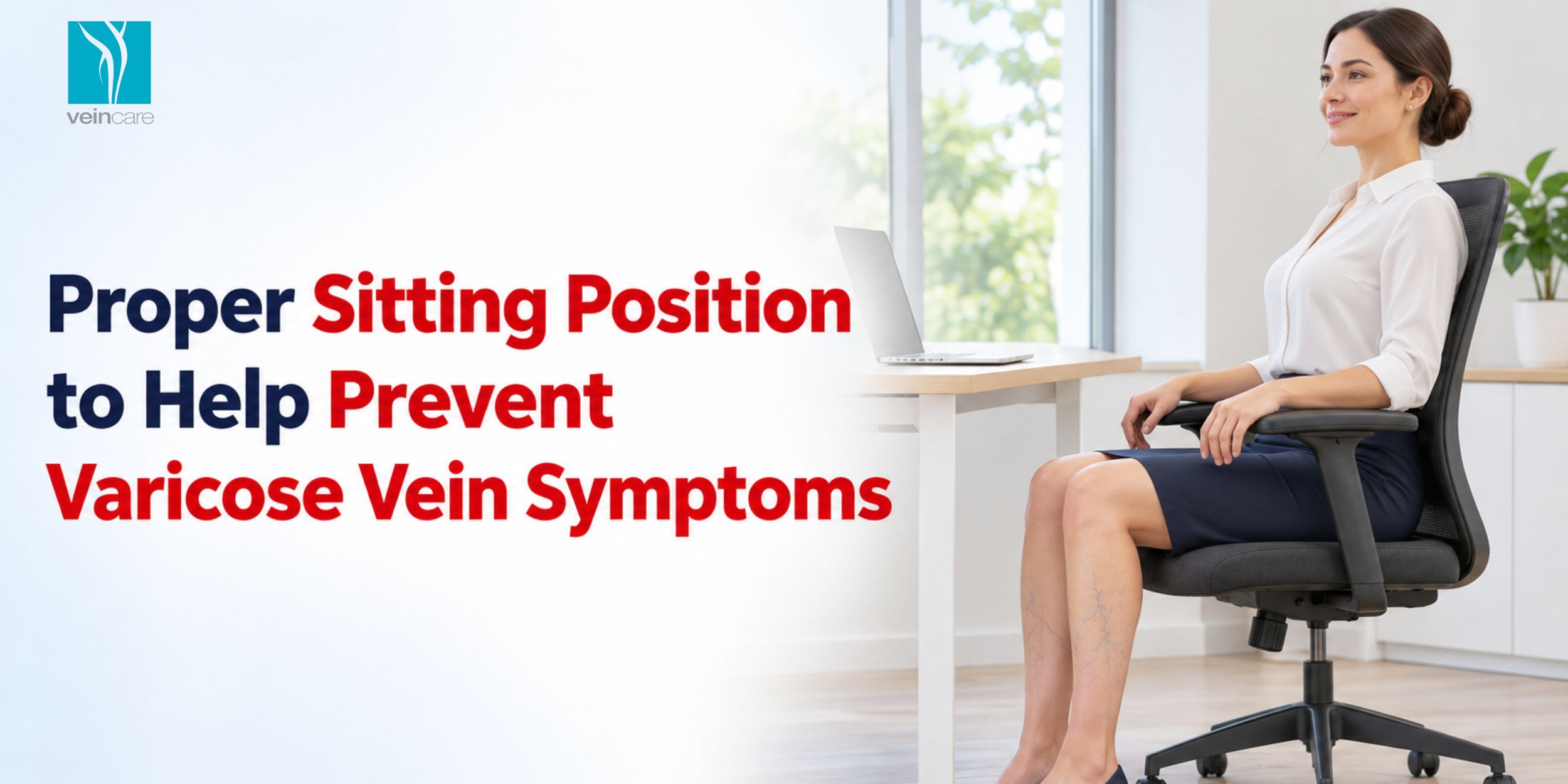
Table of Contents
Reviewed by Dr Dhillon, Vein Care
Written By Vein Care Team, Vein Assessment and Treatment Specialists
Sitting for long periods at work, while travelling or at home can leave your legs feeling heavy, tired or swollen. If you already have varicose veins, remaining seated without moving for extended periods may make these symptoms more noticeable.
However, there is an important difference between relieving symptoms and preventing the condition itself.
A proper sitting position can support leg comfort and circulation, but it cannot guarantee that varicose veins will not develop.
Varicose veins are influenced by several factors, including family history, ageing, pregnancy and changes in the vein walls or valves.
This guide explains the best sitting position for varicose veins, why regular movement matters, whether crossing your legs is harmful and how to manage discomfort during long periods of sitting.
Quick Answer: What Is the Best Sitting Position for Varicose Veins?
The best sitting position for varicose veins is generally one that keeps your feet supported, avoids prolonged pressure behind your knees and allows your ankles and calves to move comfortably.
When sitting at a desk:
- Keep your feet flat on the floor or use a footrest.
- Keep your knees relaxed at approximately hip level or slightly lower.
- Support your back and avoid uncomfortable slouching.
- Leave enough space between the chair edge and the backs of your knees.
- Change position and move your legs regularly.
Regular movement matters more than maintaining one perfect posture. Walking breaks and ankle movements activate the calf muscles, which help blood return from the legs towards the heart.
Can Sitting for Long Periods Cause Varicose Veins?
Varicose veins develop when superficial veins enlarge and their walls or valves do not function normally.
This can allow blood to flow backwards, increasing pressure within affected veins.
Long periods of sitting are not necessarily the sole cause of varicose veins. However, prolonged inactivity reduces calf-muscle movement and may contribute to leg heaviness, aching or swelling.
People who already have venous reflux or other risk factors may notice greater discomfort after remaining seated for several hours.
Why Does Sitting Affect Leg Circulation?
The calf muscles act as a pump that assists blood flow from the lower legs towards the heart.
When you walk, these muscles contract and help move blood through the veins.
During prolonged sitting, the calf-muscle pump is less active.
This is why standing, walking or moving the ankles regularly is often more useful than concentrating exclusively on posture.
For more information about risk factors, read What Causes Varicose Veins?.
What Is the Proper Sitting Position for Varicose Veins?
A comfortable sitting position should support the body while allowing the feet and ankles to move freely.
Keep Your Feet Supported
Place both feet flat on the floor whenever comfortable.
If your chair is too high, use a footrest so your legs are supported rather than left hanging.
Avoid sitting with the chair edge pressing firmly against the backs of your knees.
Keep Your Knees and Hips Comfortable
Aim to keep your knees at approximately hip level or slightly lower, rather than holding your legs in a tightly bent position.
The exact position depends on your height, chair design and individual comfort.
There is no medically established angle that guarantees varicose vein prevention.
Support Your Back Without Remaining Rigid
Use the chair’s back support and adjust your workstation to avoid unnecessary strain.
A comfortable posture can make it easier to remain active throughout the day.
However, sitting upright perfectly for several hours without moving is not necessarily better for your legs than sitting comfortably and taking regular movement breaks.
Allow Room for Ankle Movement
Avoid arrangements that restrict your feet beneath the desk.
Your seating position should allow simple ankle movements, toe raises or heel raises without discomfort.
These movements can help activate the lower-leg muscles during the working day.
Does Crossing Your Legs Cause Varicose Veins?
Crossing your legs is often described as a cause of varicose veins, but the evidence does not establish occasional leg crossing as a primary cause.
Varicose veins are more closely associated with factors such as vein-wall changes, valve dysfunction, family history and pregnancy.
However, remaining in any position for too long can be uncomfortable.
If you cross your legs, change positions regularly rather than holding the same posture for an extended period.
Is It Better to Sit With Both Feet Flat?
Keeping both feet supported is a practical option because it reduces unnecessary pressure from unsupported seating and makes ankle movement easier.
But it is not necessary to keep your feet in exactly the same position throughout the day.
The most useful sitting habit is to avoid remaining completely still for long periods.
How Often Should You Stand Up When Sitting All Day?
Frequent movement breaks are a practical way to reduce prolonged sitting.
For desk workers, a reasonable starting point is to stand, walk or move the ankles around every 30 to 60 minutes, depending on individual comfort and health needs.
This is a flexible habit, not a clinically proven interval that prevents all varicose veins.
Simple Desk Exercises for Leg Circulation
Try gentle movements such as:
- Ankle circles: Rotate your ankles comfortably in both directions.
- Seated heel raises: Keep your toes on the floor and raise your heels.
- Toe raises: Keep your heels supported and gently lift your toes.
- Ankle pumps: Alternate between pointing your toes away and drawing them towards you.
- Short walks: Stand and walk around the room when practical.
Perform movements comfortably and avoid forcing painful joints or muscles.
People with recent surgery, injuries or activity restrictions should follow their clinician’s advice.
Does Walking Help Varicose Vein Symptoms?
Walking activates the calf-muscle pump and supports venous blood return.
Regular walking may help some people manage leg heaviness or discomfort.
However, walking does not remove existing varicose veins or permanently repair damaged venous valves.
Can Elevating Your Legs Help After Prolonged Sitting?
Leg elevation may help relieve lower-leg swelling, heaviness and discomfort after extended periods of sitting or standing.
When resting, you may find it comfortable to support your legs on cushions or another suitable surface.
Some people benefit from briefly raising their legs above heart level, when appropriate for their health and mobility.
Avoid placing sustained pressure directly behind the knees.
Does Leg Elevation Prevent Varicose Veins?
No.
Leg elevation may temporarily reduce symptoms, but it does not guarantee prevention of varicose veins or reverse established venous reflux.
If swelling is persistent, worsening or unexplained, arrange medical assessment rather than relying only on elevation.
Can Compression Stockings Help People Who Sit All Day?
Graduated compression stockings may help manage symptoms such as leg heaviness, aching and swelling in selected patients.
They work by applying graduated pressure to the legs, which can support venous blood return.
However, compression is not appropriate for everyone, and different garments provide different pressures.
Should Everyone Wear Compression Stockings at Work?
No.
The decision depends on symptoms, medical history, circulation and clinical circumstances.
People with significant arterial circulation problems, certain skin conditions or reduced sensation may need additional assessment before using compression.
Ask a healthcare professional whether compression is appropriate and which type is suitable.
Compression stockings should not be described as a guaranteed method of preventing varicose veins or as a permanent treatment for faulty vein valves.
For broader self-care guidance, visit Varicose Vein Prevention.
When Should You Seek Medical Advice About Varicose Veins?
Good sitting habits can support comfort, but they cannot address every cause of leg symptoms.
Consider arranging a medical assessment if you notice:
- Enlarging or bulging veins
- Persistent leg aching or heaviness
- Ongoing ankle or lower-leg swelling
- Itching or changes in skin colour
- Recurrent inflammation around superficial veins
- A slow-healing wound near the ankle
A clinician may recommend further assessment, including duplex ultrasound, when indicated.
Which Symptoms Require Urgent Care?
Seek urgent medical assessment for new unexplained swelling or pain in one leg, especially with warmth, redness or tenderness, because these may indicate deep vein thrombosis (DVT).
A newly hard, painful or inflamed superficial vein also requires assessment.
Call 000 immediately in Australia for sudden shortness of breath, chest pain, coughing up blood, fainting or collapse.
These symptoms should not be managed through a routine varicose vein appointment.
Understanding Sitting-Related Leg Symptoms in Melbourne
People who spend long hours sitting may experience leg heaviness, swelling or discomfort, particularly when existing venous problems are present.
If symptoms persist or visible veins become increasingly prominent, a clinical assessment can help determine whether venous reflux or another condition may be contributing.
VeinCare provides information about varicose veins, vascular ultrasound and treatment options in Melbourne.
For further information, visit Varicose Vein Symptoms, Vascular Ultrasound or VeinCare’s Treatment Overview.
Conclusion
The best sitting position for varicose veins is one that supports the feet, avoids prolonged pressure behind the knees and allows regular movement.
However, posture is only one part of managing leg comfort.
Walking breaks, ankle movements and comfortable leg elevation can help reduce prolonged inactivity and may relieve some symptoms.
No sitting position can completely prevent varicose veins, and posture alone cannot remove veins that have already developed.
If symptoms are persistent, worsening or associated with concerning changes, seek appropriate medical advice.
Medical information notice: This article provides general educational information and does not replace individual medical advice, diagnosis or treatment.
FAQ'S
1. What Is the Best Sitting Position for Varicose Veins?
Sit with your feet supported, knees relaxed, back comfortable and no sustained pressure behind the knees. Change position and move your ankles regularly rather than remaining still for hours.
2. Does Crossing Your Legs Make Varicose Veins Worse?
Occasional leg crossing is not established as a direct cause of varicose veins. However, remaining in a restrictive or uncomfortable position for long periods may contribute to leg discomfort. Changing position regularly is a sensible approach.
3. How Often Should I Move If I Work at a Desk?
A practical starting point is to stand, walk or perform gentle ankle movements approximately every 30 to 60 minutes. Adjust the frequency to your comfort and medical needs. This supports regular movement but does not guarantee prevention.
4. Can Sitting With My Legs Elevated Prevent Varicose Veins?
Leg elevation may temporarily relieve swelling or heaviness, but it cannot guarantee prevention or remove existing varicose veins. Persistent or worsening symptoms should be medically assessed.
5. Can Proper Sitting Posture Remove Existing Varicose Veins?
No. Sitting posture and regular movement may help manage discomfort, but they do not eliminate established varicose veins or reliably correct underlying venous reflux.